close
Choose Your Site
Global
Social Media

Views: 0 Author: Site Editor Publish Time: 2026-09-02 Origin: Site


Commercial refrigeration is currently undergoing a massive industry shift. Businesses are rapidly moving away from rigid, permanent construction. They now favor agile, highly scalable infrastructure. Traditional cold storage builds lock vital capital into permanent fixed assets. They severely delay your crucial speed-to-market metrics. Furthermore, these older setups struggle immensely when your daily inventory demands fluctuate unpredictably. Modern operations require much greater flexibility to stay competitive in fast-paced markets.
Today, Modular Cold Storage solutions are actively replacing legacy built-in systems worldwide. They offer highly predictable costs alongside lightning-fast deployment schedules. They also guarantee strict engineering compliance without ever sacrificing critical thermal performance. You will soon learn how these modern systems compare financially and operationally to traditional permanent builds. We will explore the core evaluation criteria for selecting the absolute best panels and cooling units. Finally, you will discover real-world implementation risks and how you can evaluate potential suppliers effectively.
Speed to Market: Modular systems reduce deployment timelines from months (traditional builds) to weeks.
Financial Flexibility: Shift from heavy CapEx construction projects to scalable, asset-light investments.
Operational Agility: Panel-based architecture allows for expanding, reducing, or relocating the unit as business needs dictate.
Risk Mitigation: Engineered solutions ensure strict temperature compliance (e.g., HACCP, GMP) out of the box, reducing regulatory failure risks.
Permanent construction projects conceal many unpredictable hidden expenses. You usually face expensive local permitting delays almost immediately. General contractor fees often spiral out of control rapidly. Bespoke engineering requirements drain your budget before actual construction even begins. These permanent projects turn your vital operational capital into highly immobile real estate.
Conversely, Modular Cold Storage units provide incredibly predictable pricing structures. You understand the exact financial commitment upfront. They shift heavy financial burdens from massive capital expenditures to much more manageable operational expenses. You buy a complete system rather than funding an endless construction site.
Deployment velocity represents another massive operational differentiator. Traditional built-in rooms require long weeks for concrete curing. Custom structural framing causes further timeline extensions. Custom insulation spraying demands specialized hazardous material crews. By stark contrast, cam-lock modular panels assemble in just a few days. A trained crew simply locks the insulated walls together. Your facility achieves full operational status much faster. In cold chain logistics, rapid deployment speed directly equals increased revenue.
Asset mobility also changes your financial depreciation game entirely. Custom-built permanent rooms become permanent fixtures. You cannot take them along if you outgrow your current warehouse. You abandon your investment entirely. Modular setups are strictly classified as specialized equipment. This specific classification often qualifies them for highly beneficial accelerated depreciation schedules. You can literally unlock the panels. You can pack them up and relocate them alongside your growing operations. This ensures you never abandon your valuable infrastructure investments.
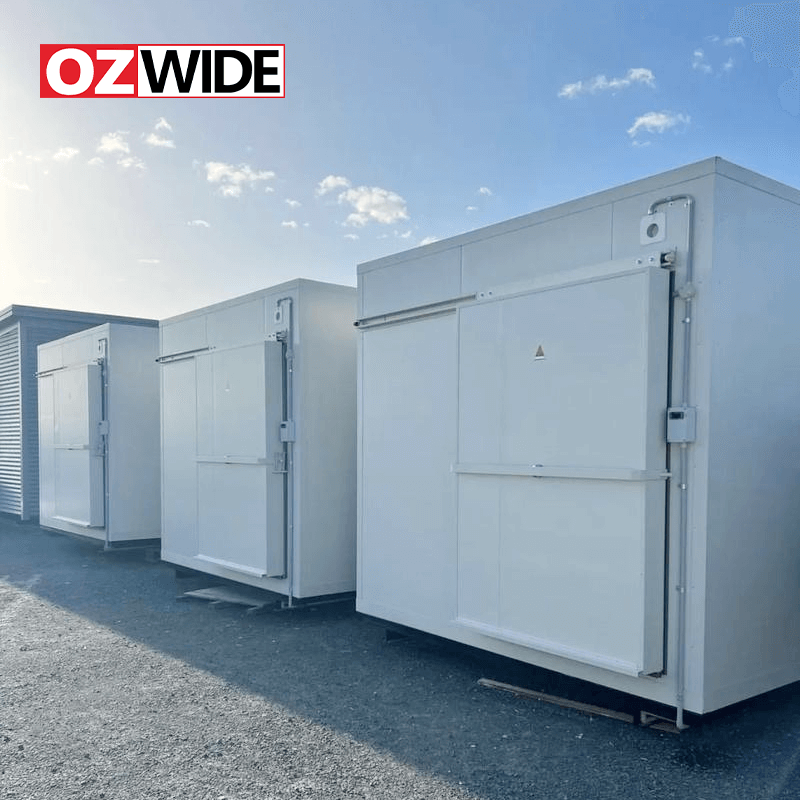
You must evaluate panel insulation materials critically before making a purchase. The industry primarily relies on Polyurethane (PUR) and Polyisocyanurate (PIR). PUR offers excellent baseline insulation properties. However, PIR provides significantly superior structural fire resistance. PIR panels maintain better long-term thermal retention. They degrade much slower over a twenty-year lifespan. Many modern building codes now specifically mandate PIR panels for large indoor commercial setups.
Panel thickness directly dictates your daily thermal performance. You cannot use a generic size for every single application. Matching the physical thickness to your target temperature range prevents excessive compressor strain. Consider these standard industry guidelines:
50mm to 80mm Panels: Ideal for standard chillers operating between +2°C and +8°C.
100mm Panels: Perfect for mixed-use transitional spaces and light freezing environments around -5°C.
120mm to 150mm Panels: Absolutely mandatory for deep freezers operating at -18°C to -25°C.
200mm Panels: Reserved for specialized blast freezers operating below -30°C.
Modern cam-lock systems represent an ingenious engineering achievement. Manufacturers embed interlocking metal hooks directly inside the panel edges. You use an Allen key to lock the walls together securely. This specific mechanism allows for effortless future expansion. You simply unlock a single end wall. You add extra floor, ceiling, and side panels. You lock the original end wall back into place. You accomplish this without demolishing your facility. It rarely disrupts your ongoing daily operations.
You must also evaluate your true space utilization carefully. Standard built-in rooms often waste valuable external warehouse footprint. They require thick concrete walls plus internal insulation layers. Modular systems optimize your internal volume exceptionally well. The self-supporting panels eliminate the need for bulky structural studs. You gain significantly more internal cubic storage space relative to the external floor footprint consumed.
Regulators show no mercy regarding temperature control compliance. Engineered modular solutions help mitigate these massive regulatory risks. Food industry operators must strictly adhere to Hazard Analysis Critical Control Point (HACCP) guidelines. Pharmaceutical operators must follow Good Manufacturing Practice (GMP) frameworks. Both demand completely smooth, easily washable internal surfaces.
High-quality Modular Cold Storage panels feature tightly sealed cam-lock joints. They eliminate the deep cracks found in traditional construction. Standard construction cracks easily harbor dangerous bacterial growth. Modular systems often include specialized radiused corner coving. This curved flooring integration prevents dirt accumulation. It ensures your cleaning crews can sanitize the room flawlessly. Passing your next FDA or local health inspection becomes significantly easier.
Choosing the correct refrigeration unit is just as crucial as selecting the panels. You generally choose between monoblock systems and split-system units. Your choice depends heavily on your specific ambient facility temperatures.
Monoblock units combine the compressor and evaporator into one single box. They hang directly on the modular panel wall. They offer true plug-and-play simplicity. However, they vent hot exhaust air directly into your surrounding warehouse. They require exceptionally well-ventilated spaces to function properly.
Split systems separate the internal evaporator from the external compressor. You place the noisy, hot compressor outside your building on the roof. They handle high ambient heat loads much better. They keep your indoor warehouse quiet and cool. They do require specialized copper pipe routing during the initial installation.
Refrigeration Unit System Comparison
System Type | Ideal Environment | Installation Complexity | Heat Dissipation Location |
|---|---|---|---|
Monoblock Unit | Large, highly ventilated warehouses | Low (Plug-and-play assembly) | Indoors (Surrounding the cold room) |
Split-System | Tight enclosures or retail spaces | High (Requires refrigerant piping) | Outdoors (Roof or exterior wall) |
Compressor power draw dramatically impacts your overall profitability. An inefficient room eats away at your financial margins daily. You must minimize energy leakage aggressively. Advanced magnetic door seals prevent warm air penetration around the hinges. Heavy-duty PVC strip curtains block rapid thermal transfer during frequent forklift loading sessions.
Smart temperature monitoring systems represent a vital technological upgrade. These digital controllers manage automated defrost cycles perfectly. They only activate heating elements when ice actually forms. Older analog systems run wasteful timed defrosts regardless of actual ice accumulation. Embracing these advanced smart components drastically lowers your ongoing operational expenses over the equipment's lifetime.
You cannot risk a single point of failure. Storing high-value inventory demands robust mechanical redundancy. Biologics, vaccines, and premium perishable seafood require absolute climate certainty. Smart operators install dual-refrigeration systems on their modular setups. These dual units alternate their daily cooling cycles automatically. They share the mechanical wear evenly.
If the primary compressor suddenly fails, the secondary system engages instantly. Automated digital alerts simultaneously ping your mobile device. They warn you about minor temperature deviations long before a catastrophic loss occurs. This integrated security prevents massive inventory spoilage events.
Many eager facility managers underestimate the absolute necessity of site preparation. You must guarantee a perfectly leveled concrete flooring surface before panel assembly begins. Modular panels demand precise geometric alignment to seal properly. If your concrete floor slopes unevenly, the panels will slightly tilt.
This tilting prevents the cam-locks from engaging fully. Micro-gaps form between the wall joints. Warm, humid warehouse air gets sucked into these microscopic gaps. The moisture instantly freezes upon hitting the cold interior. Dangerous ice buildup severely damages the panel structural integrity over time. Fixing this requires dismantling the entire room. You must level the floor perfectly beforehand to avoid this nightmare.
You must carefully analyze your surrounding ambient environment. Placing a new modular unit inside a sweltering summer warehouse introduces massive risks. Compressors generate immense heat while extracting warmth from the insulated room. They need adequate heat dissipation pathways to survive.
If your warehouse hits 40°C in July, a monoblock unit will struggle. The compressor will overheat continuously. High-pressure safety switches will trip constantly, shutting down your cooling cycle. You must install industrial exhaust fans above the modular room. Alternatively, you must route split-system condensers entirely outside the building. Do not ignore ambient constraints during your planning phase.
We often celebrate the "off-the-shelf" speed of modular solutions. However, you must realistically balance this expectation against deep customization requirements. Standard sized rooms ship incredibly fast. The panels sit readily available in supplier warehouses.
Problems arise when your facility demands custom-engineered dimensions. If you need unusual corner angles to dodge building pillars, lead times increase. Upgrading to heavy-duty automated sliding doors adds significant manufacturing delays. Specialized non-slip reinforced flooring panels take extra time to fabricate. You should always expect standard builds in days, but custom builds in several weeks.
Selecting the right manufacturing partner dictates your ultimate success. The market features many competing vendors. You must cut through the standard marketing noise. Use a structured decision framework to evaluate potential suppliers accurately.
Verify Engineering Competence: Demand fully documented technical load calculations. Never accept generic cooling capacity claims. An expert vendor calculates your required BTU capacity based on specific data. They must analyze your daily product ingress temperatures. They must account for your estimated door opening frequency. They should even calculate the body heat generated by your active warehouse staff.
Evaluate the Warranty & SLA: You must distinguish clearly between structural panel warranties and mechanical warranties. High-quality PIR panels often carry robust warranties exceeding ten years. However, moving parts break faster. Compressors usually carry standard one or two-year warranties. Read the fine print regarding preventative maintenance requirements. Missing a scheduled coil cleaning often voids your mechanical warranty entirely.
Post-Installation Support: Hardware eventually fails. Breakdowns usually happen at 2 AM on a holiday weekend. You must assess the vendor's emergency support network beforehand. Ask about their local spare parts availability. Verify their guaranteed technician dispatch times in your specific geographic region. An excellent panel system means nothing if you wait three days for a replacement fan motor.
The modern transition toward Modular Cold Storage represents a fundamental upgrade in logistics management. It effectively shifts your temperature-controlled infrastructure from a massive construction headache into a highly adaptable business asset. You gain immense financial flexibility. You deploy vital infrastructure in days rather than agonizing months. You also secure strict regulatory compliance through precision factory engineering.
We strongly recommend prioritizing vendors who provide fully transparent mechanical load calculations. They should offer extremely clear financial models outlining your upfront equipment costs and ongoing operational electricity expenses. Ensure their specific modular architectures align perfectly with your anticipated three to five-year company growth projections. Scalability remains their greatest inherent advantage.
Your immediate next step requires precise spatial planning. We advise requesting a professional site evaluation from a certified technician. Alternatively, you should utilize an online sizing calculator to scope your initial modular footprint accurately. Prepare your floor, evaluate your ambient heat, and secure your future cold chain integrity today.
A: Yes, you can install them outdoors. However, this setup requires specific weatherproof roofing attachments. You must use thicker, reinforced paneling to withstand wind shear and rain. Furthermore, you will need heavy-duty split refrigeration units. These units must be specifically engineered to handle extreme seasonal ambient temperature swings effectively.
A: Standard modular configurations usually take 1 to 3 days to fully assemble. This swift timeline assumes a trained installation crew handles the project. It also heavily relies on your site preparation. Your concrete flooring must be completely leveled and cured before the assembly crew arrives.
A: No, expansion is incredibly straightforward. The cam-lock panel systems allow you to unlock the joints effortlessly. You can extend the footprint by adding new wall, floor, and ceiling panels. You just need to ensure your existing refrigeration unit possesses the mechanical capacity to cool the newly increased internal volume.


