close
Choose Your Site
Global
Social Media

Views: 0 Author: Site Editor Publish Time: 2026-09-08 Origin: Site


Facility managers and system engineers constantly face a hard trade-off between energy draw, mechanical reliability, and lifecycle performance when specifying positive displacement compressors for fluctuating thermal loads. You need cooling infrastructure that handles extreme ambient conditions without tripping out or tearing itself apart. Relying on outdated compression mechanics guarantees frequent maintenance cycles, excessive power draw, and catastrophic failures during peak demand. Integrating a premium scroll compressor fixes these operational bottlenecks directly. By using a highly efficient dual-spiral mechanism, this technology changes the baseline for heat transfer, durability, and system longevity. We see it in the field every day: upgrading your core compression technology stops the endless repair loops and stabilizes your entire HVAC or refrigeration network.
Scroll compressors utilize two interlocking inner spirals—one stationary and one orbiting via rotation—to achieve continuous, pulse-free compression, significantly reducing mechanical wear and acoustic output.
Compared to traditional reciprocating units, scroll technology offers superior volumetric efficiency and eliminates the need for fragile suction and discharge valves, directly lowering long-term maintenance liabilities.
Accurate specification requires evaluating refrigerant compatibility, capacity modulation requirements (variable vs. fixed speed), and environmental operating conditions to ensure optimal lifecycle performance.
Modern OZWIDE systems leverage advanced scroll and rotary compressor configurations to meet stringent commercial durability requirements and energy compliance mandates across both air conditioning and refrigeration applications.
The core mechanism relies on two involute spirals. One spiral remains completely stationary while the other orbits eccentrically around it, driven by the motor shaft. This orbiting motion does not involve true rotation of the inner spiral; rather, it shifts in a circular path. As the orbiting scroll moves, it traps the low-pressure working fluid at the outer perimeter of the scroll set. The continuous movement creates crescent-shaped gas pockets that are progressively pushed toward the center of the assembly. As these pockets move inward, their volume decreases, steadily raising the pressure of the refrigerant gas until it reaches the central discharge port.
This continuous positive movement provides a massive mechanical advantage over pulsating compression methods. Traditional piston-driven systems compress gas in distinct, aggressive strokes, creating pressure pulsations that vibrate throughout the piping network. The dual-spiral design delivers a smooth, uninterrupted flow of high-pressure gas. More importantly, this continuous flow eliminates the need for suction and discharge valves. Anyone who has rebuilt a semi-hermetic reciprocating compressor knows metal flapper valves are the first components to shatter under liquid slugging or metal fatigue. Removing these valves drastically increases the mechanical robustness of the entire compression cycle.
The unidirectional flow of refrigerant through the scroll set inherently improves overall heat transfer efficiency. Because suction gas enters at the outer perimeter and discharges at the center, the thermodynamic process remains spatially separated. The outer edges remain cool while the center runs hot. This creates a consistent, stable temperature gradient across the compressor shell. The working fluid does not absorb excess heat from the discharge components before compression, effectively bridging the thermodynamic gap between the system's heat source and heat sink with minimal energy loss.
Volumetric efficiency approaches 100% because there is virtually no re-expansion volume. All compressed gas is pushed out the central port. In piston cylinders, a small amount of high-pressure gas always remains at the top of the stroke, which must re-expand before new suction gas can enter, wasting energy. The dual-spiral design eliminates this inefficiency entirely.
Engineering compliance is another major factor in the durability of the dual-spiral design. Compliance refers to the ability of the scroll members to separate slightly under abnormal internal pressures. Radial compliance allows the flanks of the spirals to pull apart horizontally, while axial compliance allows vertical separation. If liquid refrigerant or microscopic debris enters the compression chamber, the spirals yield just enough to pass the uncompressible mass through the discharge port. In a rigid reciprocating cylinder, attempting to compress liquid results in shattered valves or bent connecting rods. The compliance feature prevents these catastrophic mechanical failures, making the system highly tolerant to liquid slugging during flooded starts or rapid load changes.
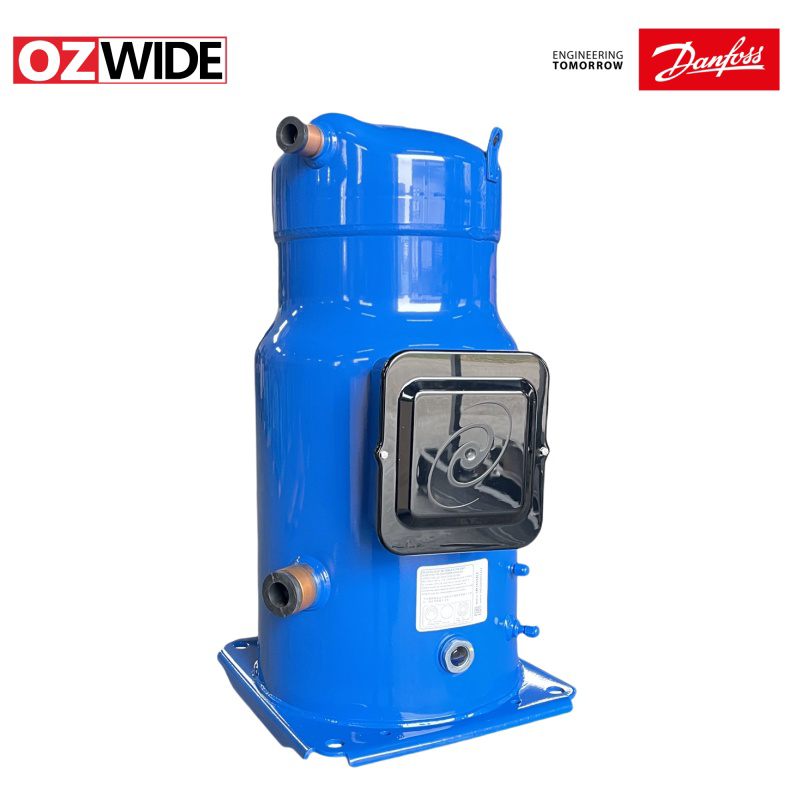
Establishing the correct operational sweet spot dictates system design success. Scroll technology dominates the mid-range commercial HVAC and refrigeration markets, typically covering applications from 2 to 40 tons per compressor. Rotary compressors, which utilize a rolling piston and a spring-loaded vane, are generally restricted to smaller, fractional tonnage applications like window units or mini-splits due to limitations in scaling their internal geometry. Conversely, screw compressors handle large-scale industrial loads exceeding 50 tons. The dual-spiral design perfectly fills the massive middle market, offering a compact footprint and high efficiency for rooftop units, chillers, and supermarket racks.
Compressor Technology | Ideal Tonnage Range | Moving Parts | Liquid Tolerance | Primary Application |
|---|---|---|---|---|
Rotary | 0.5 to 3 Tons | Moderate | Low | Residential Mini-Splits, Window Units |
Reciprocating | 1 to 20 Tons | High (Pistons, Valves) | Very Low | Legacy Commercial Refrigeration |
Scroll | 2 to 40 Tons | Low (Two Spirals) | High (Compliance) | Commercial HVAC, Supermarket Racks |
Screw | 50+ Tons | Moderate (Twin Rotors) | Moderate | Industrial Chillers, Large Facilities |
The operational demands placed on these units vary significantly between air conditioning and refrigeration. Air conditioning applications generally involve comfort cooling with relatively stable loads and moderate compression ratios. Commercial refrigeration systems demand rapid temperature pull-downs, strict adherence to setpoints, and high compression ratios to achieve freezing temperatures. Scroll units excel in both environments, but refrigeration-specific models are engineered with enhanced motor cooling and liquid injection technologies to manage the extreme discharge temperatures associated with low-temperature freezing cycles.
Vibration and noise output are major concerns in commercial installations, particularly in noise-sensitive environments like hospitals, schools, and office buildings. The dual-spiral design inherently reduces acoustic output because it eliminates reciprocating mass. There are no pistons slamming up and down, and no valves clicking open and shut. The perfectly balanced rotational movement of the orbiting scroll minimizes structural vibration, preventing harmonic resonance from traveling through the copper piping and building framework. You rarely need heavy spring isolators for a scroll unit; standard rubber mounting grommets are usually sufficient.
Lifecycle maintenance intervals heavily favor the scroll design. By eliminating pistons, wrist pins, connecting rods, and valves, these units achieve a roughly 70% reduction in moving parts compared to reciprocating alternatives. Fewer moving parts translate directly to higher mechanical reliability and reduced downtime. In mission-critical refrigeration—where a downed compressor means thousands of dollars in spoiled inventory—this inherent reliability is paramount. The simplified internal mechanics ensure that the unit can run continuously for years without the mechanical degradation that plagues more complex compression assemblies.
Environmental regulations are forcing a rapid transition away from high-GWP hydrofluorocarbons like R-410A and R-404A. Specifying a compressor today requires strict evaluation of its compatibility with modern, low-GWP alternatives such as R-32 or R-454B. These new working fluids often operate at different pressures and generate higher discharge temperatures. The compressor must feature robust internal motor protection and optimized scroll profiles to handle the altered thermodynamic properties of next-generation refrigerants without suffering premature thermal breakdown. In low-temperature applications, vapor injection technology is often required to keep the scroll set cool under high compression ratios.
Lubrication requirements are equally critical when transitioning to new refrigerant blends. Modern units rely on synthetic lubricants, primarily Polyolester (POE) or Polyvinyl Ether (PVE) oils, to ensure proper oil return and internal sealing. POE oil is highly hygroscopic, meaning it absorbs moisture from the atmosphere rapidly. If you leave a system open to ambient air during installation, the moisture reacts with the oil to form acids, leading to copper plating and chemical breakdown of the motor windings. Engineers must strictly match the compressor’s approved oil type with the specific refrigerant to maintain the chemical stability of the system.
Matching fluctuating thermal loads requires advanced capacity modulation. Variable speed (inverter-driven) technology alters the electrical frequency supplied to the motor, allowing the compressor to speed up or slow down based on real-time demand. Digital scroll technology takes a different approach, using pulse-width modulation to physically separate the scroll sets for brief intervals, effectively reducing capacity without changing motor speed. Inverter drives offer the highest efficiency and tightest temperature control, while digital modulation provides a simpler, highly robust alternative for harsh environments where power quality is inconsistent.
The financial impact of part-load efficiency cannot be overstated. Most commercial HVAC systems operate at peak capacity less than 5% of the year. Evaluating the Integrated Part Load Value (IPLV) or Non-Standard Part Load Value (NPLV) reveals the true energy consumption of the system. Precise load matching via variable speed or digital modulation drastically reduces energy consumption compared to traditional on/off cycling. Eliminating the massive inrush current required to start a fixed-speed motor repeatedly throughout the day flattens electrical demand spikes and significantly reduces utility expenditures over the equipment's lifespan.
OZWIDE systems are meticulously engineered to maximize the inherent durability of premium compression technology. Integrating a high-performance compressor into a poorly designed system negates its benefits. OZWIDE architectures focus on optimized condenser coil sizing, precise electronic expansion valve (EEV) control, and intelligent defrost algorithms. These system-level synergies ensure the compressor operates within its safest design envelope, particularly in demanding, continuous-duty refrigeration environments where extreme ambient temperatures threaten system stability.
Sourcing components from a leading supplier like OZWIDE provides a distinct strategic advantage. Facility managers gain access to premium units specifically engineered for rigorous durability and seamless integration into existing infrastructure. The control boards, sensor arrays, and power management modules are pre-configured to communicate flawlessly with the compressor. This eliminates the integration headaches and custom programming often required when retrofitting mismatched components into legacy systems.
System design always involves conceptual trade-offs. The primary decision revolves around selecting variable-speed versus fixed-speed architecture. Variable-speed units require higher initial integration costs, complex inverter drives, and sophisticated electronic controls. They demand pristine power quality and careful shielding against electromagnetic interference. Fixed-speed models are mechanically simpler, cheaper to install, and easier to troubleshoot. However, fixed-speed units suffer from operational limitations, higher energy draw during part-load conditions, and wider temperature swings in the conditioned space. Engineers must weigh the complexity of variable-speed controls against the strict energy efficiency mandates of the facility.
The most immediate and destructive risk during installation is incorrect phase wiring in 3-phase systems. Unlike reciprocating compressors, which pump refrigerant regardless of rotational direction, a scroll unit must rotate in one specific direction. If the electrical phases are reversed, the orbiting scroll runs backward. It will not compress gas, will generate a loud, abnormal rattling noise, and will fail to circulate lubricating oil. Running in reverse for even a few minutes can cause catastrophic destruction of the scroll flanks and motor bearings. The mandatory installation of phase monitors and rotation protection relays is non-negotiable for 3-phase applications.
Piping design and oil management protocols dictate the long-term survival of the compressor. As refrigerant travels through the system, it carries a small amount of oil. The piping network must be sized correctly to maintain sufficient refrigerant velocity to carry that oil back to the compressor sump. This is especially critical in variable-speed applications during low-load operation, where refrigerant velocity drops significantly.
Pitch all horizontal suction lines at least 1/4 inch per 10 feet toward the compressor to assist gravity oil return.
Install P-traps at the base of any vertical suction riser exceeding 8 feet to catch and lift oil during low-load conditions.
Utilize active oil separators on the discharge line for low-temperature refrigeration racks to keep oil out of the evaporator coils.
Perform a deep vacuum dehydration down to 500 microns to ensure all moisture is boiled out of the POE oil before releasing the refrigerant charge.
Facility teams must establish rigorous baseline diagnostic routines to protect the equipment. Preventative maintenance should focus on discharge temperature monitoring, as excessive heat indicates high compression ratios or inadequate cooling. Superheat and subcooling verification ensures the expansion valve is feeding the correct amount of refrigerant, preventing liquid flood-back. Routine vibration analysis and acoustic profiling can detect early signs of bearing wear or internal mechanical stress before they escalate into total failure.
Understanding the reality of hermetically sealed designs is vital for maintenance planning. The outer steel shell is welded completely closed at the factory. The internal components—the motor, bearings, and scroll sets—are entirely unrepairable in the field. If an internal mechanical failure occurs, the only solution is a full unit replacement. You must recover the refrigerant, cut out the old compressor, braze in a new one, and perform a deep vacuum dehydration. Because internal repairs are impossible, maintenance must be 100% preventative. Keeping the condenser coils clean, maintaining proper charge, and ensuring clean power are the only ways to avoid massive replacement costs.
Electrical maintenance is just as critical as refrigerant management. Pitted or burnt contactors cause voltage imbalances across the three phases. Even a 2% voltage imbalance can cause a 10% increase in motor winding temperatures, rapidly degrading the internal insulation. Replacing a $50 contactor annually is the best insurance policy you can buy for a commercial compressor.
Megger test the compressor windings annually to track insulation degradation over time.
Measure voltage drop across the contactor under full load; replace the contactor if the drop exceeds 2 volts.
Verify the crankcase heater is energized during the off-cycle to prevent liquid refrigerant from migrating into the oil sump.
Check the superheat at the compressor inlet to guarantee you have at least 20 degrees of superheat, ensuring no liquid is washing out the bearings.
The dual-spiral compression mechanism represents the most balanced and reliable foundation for modern commercial HVAC and refrigeration infrastructure. By eliminating fragile valves and providing continuous, pulse-free gas flow, this technology offers an unmatched combination of volumetric efficiency, liquid tolerance, and mechanical reliability. Facility engineers looking to future-proof their thermal management systems must prioritize these units to meet increasingly stringent energy and environmental standards.
Install phase protection relays on all 3-phase equipment to prevent reverse rotation damage.
Audit your current piping architecture to ensure proper oil return velocities, especially on variable-speed retrofits.
Implement a strict preventative maintenance schedule focusing on superheat verification and contactor replacement to protect the hermetic compressor.
Consult OZWIDE technical specialists to match your specific thermal load profiles with the correct capacity modulation strategy.
A: It is a positive displacement device using two interlocking spirals. One spiral is stationary while the other orbits eccentrically. This motion traps refrigerant gas at the outer edge and pushes it into progressively smaller pockets toward the center. This compresses the fluid continuously, facilitating efficient heat transfer without the pulsation found in piston-driven equipment.
A: The biggest advantage is the complete elimination of suction and discharge valves, which are the most common failure points in reciprocating units. They feature roughly 70% fewer moving parts, provide continuous pulse-free compression, operate with significantly lower vibration, and deliver higher volumetric efficiency because there is no re-expansion volume at the top of a stroke.
A: No. Hermetic shells are permanently welded closed at the factory. You cannot access the internal motor, bearings, or scroll flanks in the field. Any internal mechanical failure requires a complete compressor replacement. This involves recovering the refrigerant, cutting out the old unit, and brazing in a new one, making preventative maintenance absolutely critical.
A: It handles liquid through a mechanical feature called radial and axial compliance. This allows the interlocking spirals to separate slightly under abnormal internal pressure. If a slug of liquid refrigerant or debris enters the chamber, the scrolls yield just enough to pass the uncompressible mass through the discharge port without shattering internal components.
A: Running backward is caused by incorrect phase wiring in the incoming electrical supply. Because the internal geometry requires unidirectional rotation to compress gas and pump oil, reverse rotation causes immediate, severe mechanical damage and oil starvation. Installing phase protection relays is mandatory to detect wiring faults and prevent the unit from starting.
A: A commercial unit typically lasts 10 to 15 years under normal operating conditions. Reaching this lifespan depends entirely on proper system design and maintenance. You must ensure adequate oil return, maintain clean electrical contactors, prevent liquid flood-back, and keep the unit operating strictly within its designed pressure and temperature envelopes.


