close
Choose Your Site
Global
Social Media

Views: 0 Author: Site Editor Publish Time: 2026-07-13 Origin: Site


Choosing a compressor is never just a simple technical preference. It represents a massive, long-term operational expense commitment for your facility. Legacy reciprocating piston models dominated industrial and commercial spaces for decades. However, modern facility upgrades are changing the landscape rapidly. Commercial HVAC installations and specialized OEM applications, like transport refrigeration and heat pumps, increasingly shift toward scroll technology. Why are engineers making this transition? Modern facilities need better energy efficiency. They demand stricter noise compliance. They also require fewer maintenance interruptions. This guide strips away typical marketing claims. We objectively evaluate where a Scroll Compressor delivers a verifiable return on investment. You will learn exactly where the technology falls short in practical applications. Finally, we provide a clear framework to help you justify this equipment in your next purchasing decision.
Operational Efficiency: Continuous compression cycles eliminate the volumetric efficiency losses common in piston alternatives, directly lowering energy consumption.
Mechanical Reliability: Featuring up to 70% fewer moving parts than reciprocating units, scroll compressors drastically reduce mechanical failure points and routine maintenance requirements.
Acoustic Profile: The absence of suction/discharge valves and smooth orbital motion results in significantly lower noise and vibration, ideal for noise-sensitive environments.
Replacement Reality: Because most commercial scroll units are hermetically sealed, they typically require full replacement rather than field rebuilding when catastrophic failure occurs—a critical factor in lifecycle cost analysis.
Aging compressor systems hide expensive inefficiencies across your facility. Facilities often normalize these hidden costs over time. Reciprocating units inherently create gas pulsations. These pulsations send vibrations through your piping network. Over time, this constant mechanical stress damages pipe joints and causes costly refrigerant or air leaks. Additionally, traditional compressors demand frequent valve replacements. They often require expensive acoustic dampening enclosures to meet workplace safety standards. Energy spikes during piston startup cycles further inflate monthly utility bills.
You must define clear success criteria before upgrading your equipment. A successful upgrade should deliver measurable operational improvements. First, expect a 15% to 20% reduction in power consumption compared to aging piston units. Second, the upgrade must eliminate quarterly tear-down maintenance routines. Your technicians should spend less time replacing worn piston rings. Finally, the new system should achieve compliance with stricter workplace noise regulations without needing heavy soundproof baffling.
Upgrading involves a shift in how you evaluate capital expenditure. The upfront purchase price for a scroll unit might be higher than a standard reciprocating model. However, you must look at the accelerated payback period. Dramatic energy savings offset the initial price tag quickly. Reduced downtime keeps your operations running smoothly. You spend less money on spare parts and emergency maintenance calls. This financial shift makes the initial investment highly justifiable for most continuous-duty applications.
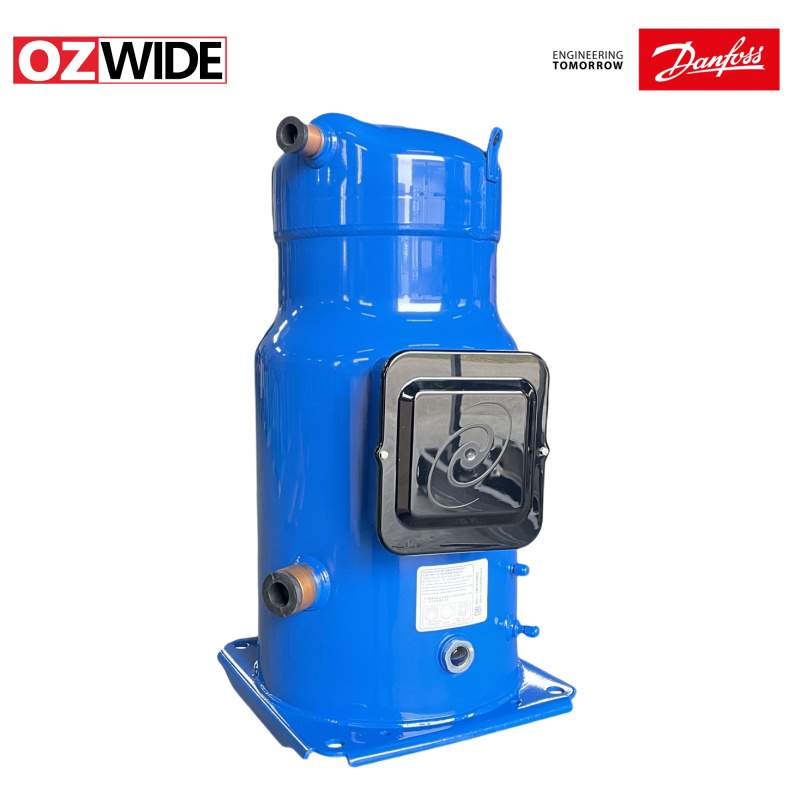
Reciprocating units leave residual high-pressure gas inside the cylinder clearance volume after every stroke. This trapped gas re-expands during the intake cycle. Re-expansion blocks new gas from entering, which wastes energy. Scroll technology operates differently. The orbiting scroll continuously pushes all trapped gas toward the center discharge port. It leaves zero clearance volume behind.
This mechanism drives a powerful business outcome. Your facility gets a highly consistent output capacity. You draw significantly less energy per Cubic Foot per Minute (CFM) generated. This continuous intake and discharge cycle maximizes the electrical input. It ensures you do not pay for wasted mechanical effort.
Traditional compressors rely on complex internal mechanics. They use delicate valve plates, heavy connecting rods, and friction-prone piston rings. Every single one of these components represents a potential failure point. A scroll unit changes this paradigm completely. It operates with only one moving part. An orbiting scroll interacts smoothly with a stationary fixed scroll.
This mechanical simplicity directly improves your maintenance schedule. You benefit from vastly extended service intervals. Facilities record a much higher mean time between failures (MTBF). Fewer moving parts mean less internal friction. Less friction means less internal wear and tear. Your maintenance team can focus on preventive facility care instead of reactive mechanical repairs.
Reciprocating cycles create a mechanical hammering effect. They forcefully pull in gas and slam valves shut. This creates aggressive gas pulsations and intense physical vibrations. Scroll technology provides a continuous, uninterrupted gas flow. The smooth orbital motion eliminates sudden pressure drops and mechanical hammering entirely.
Acoustic superiority transforms how you design facility layouts. You eliminate the need for heavy, expensive vibration-damping mounts. You can safely install these units indoors. Engineers often place them much closer to the point-of-use. This makes them ideal for noise-sensitive environments. Medical facilities, quiet office HVAC systems, and residential neighborhoods benefit heavily from this silent operation.
Generating high output typically requires massive equipment. However, scroll technology delivers exceptional capacity from a much smaller physical envelope. The continuous compression cycle maximizes the internal chamber space. This eliminates bulky cylinder heads and oversized crankcases found in older designs.
This compact footprint solves major engineering challenges. It becomes critical for space-constrained applications. Modular facility designs rely on small equipment footprints to maximize floor space. Transport refrigeration trucks use them to save weight and increase cargo capacity. Commercial heat pumps fit easily on crowded rooftops. Specifying a Scroll Compressor gives engineers more physical flexibility during system design.
Selecting the right technology requires matching the equipment to your specific duty cycle. No single design fits every industrial application perfectly. We must map the mechanical strengths of each compressor type to real-world demands. This prevents costly premature failures and optimizes your energy usage.
You should specify scroll technology for continuous duty cycles. They perform best in medium-capacity requirements ranging from 2 to 30 horsepower (HP). You must choose them when low noise and high reliability are non-negotiable project requirements. Primary use cases include commercial HVAC systems and air-source heat pumps. They also dominate medical air applications and food or beverage chilling facilities. Their smooth operation handles constant, steady loads flawlessly.
You should retain reciprocating compressors for highly variable applications. They handle intermittent loads better than most alternatives. They also excel in extremely high-pressure applications. Heavy industrial pneumatics often rely on piston designs. In these harsh environments, field repairability matters more than baseline electrical efficiency. Technicians can easily swap damaged valves or pistons on-site to keep production moving.
You must escalate to screw compressors for massive industrial demands. When your baseline load exceeds 30 HP, screw technology becomes necessary. They support 24/7, high-volume air generation without breaking a sweat. Large-scale automotive manufacturing plants and major chemical refineries rely on screw compressors for their central plant air systems.
Compressor Type | Best Duty Cycle | Capacity Range | Key Strength | Ideal Use Cases |
|---|---|---|---|---|
Scroll | Continuous, steady loads | 2 to 30 HP | High efficiency, ultra-low noise | Commercial HVAC, Heat Pumps, Medical Air |
Reciprocating (Piston) | Intermittent, variable loads | Fractional to 20+ HP | High pressure, easy field repairs | Harsh industrial pneumatics, heavy duty shops |
Rotary Screw | 24/7 base-load demand | 30+ HP | Massive volume generation | Automotive manufacturing, large industrial plants |
We must address engineering trade-offs transparently. Evaluating risks ensures you do not install the wrong equipment. While highly efficient, this technology requires careful installation and strict environmental controls.
Tolerance sensitivity presents a significant operational risk. These machines rely on extremely tight machining tolerances between the orbiting and fixed spirals. Because of these tight clearances, they are highly sensitive to particulate contamination. They are less forgiving of liquid slugging compared to robust piston designs. If liquid refrigerant or heavy debris enters the compression chamber, it can warp the internal spirals instantly. You must install proper upstream filtration. Strict suction line management is mandatory to protect your investment.
You must also understand the "Replace vs. Repair" paradigm. Most small-to-medium commercial units are hermetically sealed. Manufacturers weld the steel casing shut at the factory. If the internal scroll mechanism fails, you cannot simply rebuild it. The entire compressor must usually be replaced. While they fail less often, a catastrophic failure demands a full unit replacement rather than a cheap field repair.
Directional rotation dependency creates a major installation risk. Unlike piston units, scroll models can only run in one direction. The orbital mechanics only compress gas when spinning correctly. If a technician wires the electrical phases incorrectly during installation, the motor runs backward. Running in reverse provides zero lubrication to the internal bearings. Incorrect phase wiring can destroy the unit in minutes. We highly recommend installing phase-protection monitors. These inexpensive relays stop the system immediately if they detect reverse polarity.
Evaluating vendors requires looking past basic spec sheets. You must align their technical offerings with your operational realities. Use the following logic to shortlist the best equipment partners for your facility.
Capacity Matching: Ensure the vendor sizes the unit based on your actual continuous demand. Many facilities make the mistake of simply matching the peak horsepower of a legacy reciprocating unit. Because scroll units deliver 100% volumetric efficiency, you can often step down in horsepower while maintaining the same CFM output.
Fixed vs. Inverter (Variable Speed) Drive: Evaluate whether the vendor offers Variable Frequency Drive (VFD) options. Fixed-speed units run at full capacity regardless of demand. VFD-driven models slow down the motor during partial load conditions. This feature further optimizes energy usage and prevents short-cycling.
Oil-Free vs. Lubricated: Identify your air purity requirements. For pharmaceutical manufacturing, food processing, or electronics assembly, you cannot risk oil contamination. Your shortlisting must focus strictly on vendors offering Class 0 oil-free enclosures. These specialized units use advanced coatings instead of liquid lubricants.
Warranty and Support: Remember the replacement paradigm mentioned earlier. Since you cannot rebuild hermetically sealed units easily, warranty coverage becomes critical. Prioritize vendors offering comprehensive lifecycle warranties. Ask about their local inventory levels. You need a partner who guarantees rapid fulfillment of replacement units to minimize operational downtime.
Modern industrial and commercial operations demand smarter equipment choices. The core advantages of scroll technology remain clear and verifiable. They provide superior volumetric efficiency, outstanding mechanical reliability, and ultra-low noise emissions. These factors make them the superior choice for modern, medium-capacity continuous operations. They eliminate the mechanical fatigue and energy waste associated with older piston designs.
Audit your current energy usage logs to identify baseline costs.
Review your quarterly maintenance records to calculate the hidden costs of piston repairs.
Calculate the potential return on investment by comparing energy savings against the upfront equipment cost.
Schedule a technical site assessment with a certified HVAC or pneumatics engineer to verify sizing requirements.
Install phase-protection monitors and high-quality upstream filters during your next facility upgrade.
A: They are better for continuous, medium-flow applications requiring high efficiency and low noise. They eliminate valve wear and reduce energy waste. However, they are not inherently "better" for ultra-high-pressure tasks. Piston units still excel in highly intermittent, harsh industrial environments where field repairability is required.
A: Generally, no. Most commercial HVAC and standard units are hermetically sealed at the factory. You can swap minor external electrical components like contactors or capacitors. However, an internal mechanical failure requires a full unit replacement because the casing cannot be opened and resealed in the field.
A: Their compact physical footprint and lighter weight make them ideal for mobile environments. Space is highly limited in transport refrigeration and mobile AC systems. Furthermore, their smooth, low-vibration operation ensures they do not transfer mechanical stress to other sensitive vehicle components during transit.
A: When properly sized and maintained, a commercial unit typically lasts 10 to 15 years. This equates to roughly 40,000 to 60,000 operating hours. Achieving this lifespan requires clean upstream filters, proper refrigerant management, and correct electrical phase monitoring to prevent reverse rotation damage.


