close
Choose Your Site
Global
Social Media

Views: 0 Author: Site Editor Publish Time: 2026-09-12 Origin: Site


The escalating cost of product contamination and stringent regulatory standards are forcing facility managers to re-evaluate their compressed air systems. Traditional oil-lubricated compressors rely on complex, multi-stage filtration to achieve clean air. This conventional approach leaves facilities vulnerable to oil carryover, filter degradation, and high maintenance overhead. Relying on downstream filters to catch upstream oil introduces a continuous point of failure that can compromise an entire production run.
To eliminate these risks, operators are shifting toward mechanically distinct alternatives that remove oil from the compression chamber entirely. An oil-free scroll compressor offers a verifiable path to Class 0 air purity. By utilizing an innovative orbital compression mechanism, this equipment fundamentally alters facility maintenance requirements and operational efficiency. It provides a continuous supply of clean air without the inherent risks associated with liquid lubricants, transforming how sensitive industries manage their pneumatic infrastructure.
Absolute Air Purity: Oil-free scroll compressors eliminate the risk of downstream oil contamination by design, ensuring ISO 8573-1 Class 0 compliance without relying on inline filtration.
Reduced Maintenance Overhead: The absence of oil changes, oil separation, and condensate disposal significantly lowers routine maintenance requirements, while a design with fewer moving parts minimizes mechanical failure points.
Acoustic and Spatial Efficiency: Characterized by ultra-quiet operation, minimal vibration, and a lighter, more compact footprint, these units can be installed directly at the point of use, eliminating the need for dedicated compressor rooms.
Duty Cycle Considerations: While highly efficient for specific applications, scroll compressors must be evaluated strictly against facility flow (CFM) requirements and duty cycle demands to ensure long-term reliability.
Understanding how a compressor achieves compression without lubrication requires looking at the physical geometry of the air end. Traditional systems depend on oil to seal gaps, dissipate heat, and prevent metal-on-metal contact. Removing this fluid requires a complete mechanical redesign. The scroll mechanism achieves this through precise geometric engineering and advanced material science, operating on principles entirely different from reciprocating pistons or rotary screws.
The core of the system relies on orbital motion and continuous compression cycles. Inside the compression chamber, two spiral-shaped scroll elements interlock. One scroll remains completely fixed and stationary, while the other orbits eccentrically around it. This orbiting motion does not involve rotation; rather, the moving scroll shifts in a continuous circular path. We can break down this continuous process into four distinct mechanical phases:
Suction Phase: As the orbiting scroll moves, it creates an opening at the outer edge of the interlocking spirals, drawing ambient air into the compression chamber.
Sealing Phase: The continuous orbital movement closes the outer opening, trapping the intake air in crescent-shaped pockets between the two scrolls.
Compression Phase: The orbiting motion progressively pushes these air pockets toward the center of the spiral. As the pockets move inward, their volume decreases, which steadily increases the air pressure.
Discharge Phase: The highly pressurized air reaches the center of the stationary scroll and is discharged through a central port, delivering a smooth, pulsation-free flow of compressed air to the facility network.
Mechanical simplicity defines this technology. The design operates without complex valve systems, crankshafts, or connecting rods. You will not find pistons to wear out or intake valves to fail. This dramatic reduction in moving parts directly correlates to lower friction, reduced wear and tear, and higher long-term reliability. Fewer mechanical components mean fewer potential points of failure on the shop floor.
We must clarify the "oil-free" distinction. While scroll technology is heavily utilized in domestic HVAC and refrigeration—where it is typically oil-lubricated—industrial oil-free variants are engineered differently. To achieve "oil-free by design" status, these units utilize specialized materials to manage friction and sealing without liquid lubricants. The edges of the scrolls are fitted with PTFE (Teflon) tip seals. These advanced polymer seals maintain the tight tolerances required to trap the air while providing dry lubrication. The bearings are permanently sealed and isolated from the compression chamber, ensuring that no grease or lubricating fluid can ever migrate into the air stream.
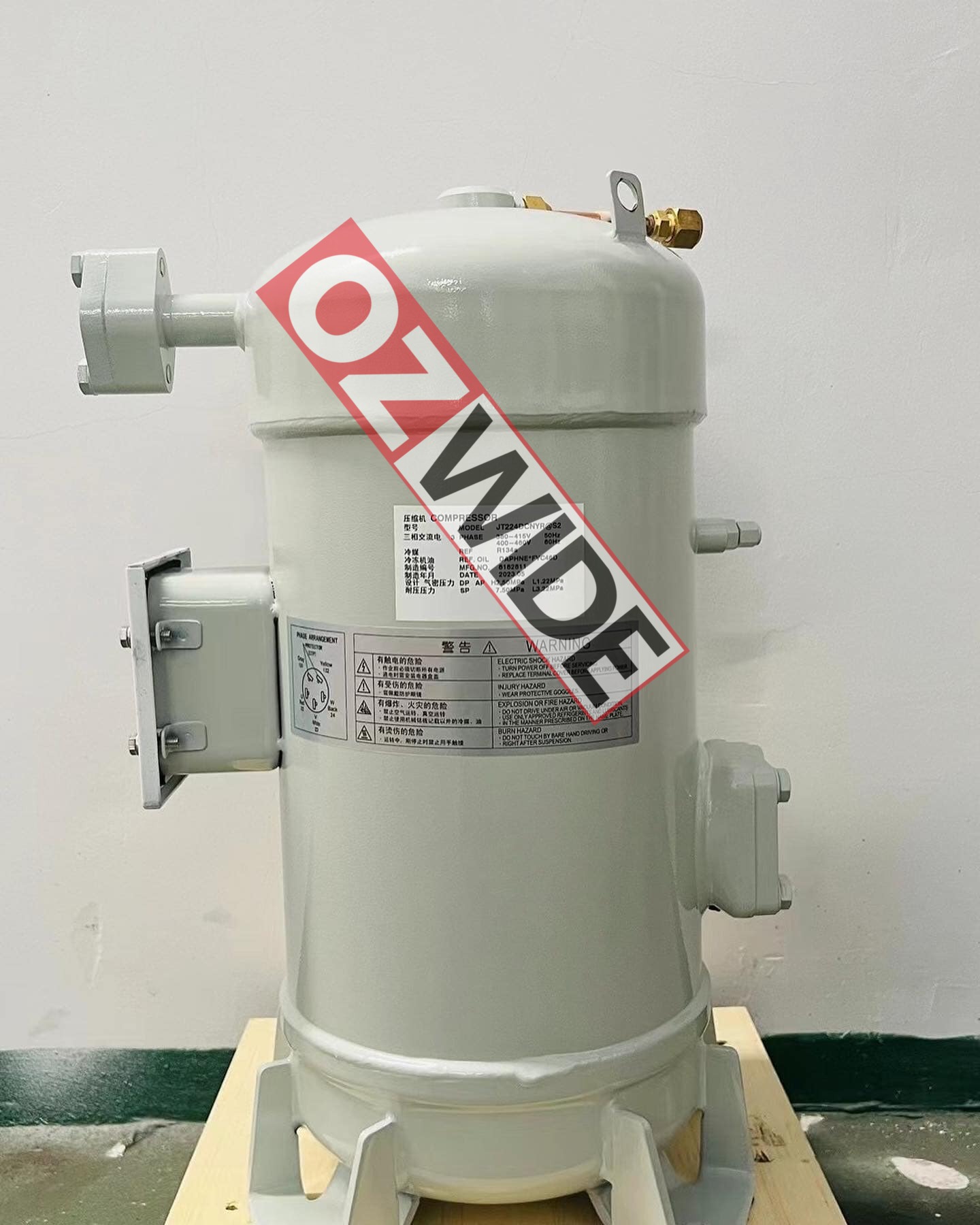
The structural design of the scroll mechanism translates directly into measurable operational outcomes. For facilities where air quality dictates product viability, the physical features of the compressor provide distinct advantages over traditional pneumatic generation methods.
Guaranteed air purity is the primary operational outcome. By completely removing oil from the compression chamber, you eliminate the risk of downstream contamination. In sensitive manufacturing environments, oil carryover leads to product spoilage, batch rejections, and severe liability. A single drop of oil in a pharmaceutical cleanroom or a food processing line can force a complete facility shutdown for sterilization. The oil-free design ensures strict adherence to ISO 8573-1 Class 0 standards, mapping the absence of liquid lubricants directly to the elimination of these contamination risks.
Acoustic performance allows for point-of-use installation. The continuous, pulsation-free movement of the orbiting scroll generates very low decibel (dB) output, often operating between 50 and 60 dB. This is comparable to the noise level of a normal conversation. Because the equipment is exceptionally quiet and produces minimal vibration, facility managers can install the units directly on the production floor next to the application. You avoid constructing dedicated, sound-proofed compressor rooms and reduce the length of piping required, thereby minimizing pressure drops across the distribution network.
Compact footprint and weight advantages further enhance installation flexibility. The absence of oil reservoirs, heavy separation tanks, and complex filtration blocks makes these units significantly lighter and smaller than their oil-flooded counterparts. This spatial efficiency allows for integration into tight facility spaces, mezzanines, or directly inside OEM equipment. Manufacturers building complex machinery, such as medical ventilators or transit braking systems, frequently embed these compact units directly into their chassis.
Environmental and compliance benefits are inherent to the dry compression process. Operating an oil-lubricated system generates hazardous condensate—a toxic mixture of water and degraded compressor oil that must be separated and disposed of according to strict environmental regulations. Removing oil from the equation eliminates hazardous condensate disposal entirely. The facility discharges only clean water, reducing the site's environmental footprint and simplifying compliance with local environmental protection agency mandates.
Transitioning to an oil-free system fundamentally changes how maintenance teams interact with the pneumatic infrastructure. While no machine is maintenance-free, the specific tasks required to keep a scroll unit operational are highly predictable and less labor-intensive.
Eliminating the oil management infrastructure removes significant operational burdens. Facilities no longer need to manage the procurement, storage, and handling of specialized synthetic compressor oils. The labor hours previously dedicated to draining hot oil, replacing heavy oil separator elements, and managing hazardous waste manifests are completely recovered. This streamlines facility operations and reduces the administrative overhead associated with environmental compliance.
Removing oil maintenance entirely also mitigates human error. In traditional systems, catastrophic equipment failure is frequently caused by overfilling or underfilling the compressor oil. Incorrect oil viscosity, mixed lubricant types, or neglected oil change intervals can destroy a rotary screw air end. By utilizing dry compression, the risk of operator error destroying the equipment is virtually eliminated. The machine either runs or it does not, without the variable of fluid degradation.
Preventative maintenance schedules for these units are straightforward. The primary wear components are the PTFE tip seals, the bearings, and the air intake filters. Tip seals typically require replacement every 8,000 to 10,000 operational hours, depending on ambient conditions. The replacement process is highly practical for field technicians. You isolate the pump, remove the fixed scroll housing, pull the worn PTFE strip from the machined groove, press in the new seal, and re-torque the housing bolts. This task can often be completed on-site in a few hours. When framed against the constant filter changes, oil sampling, and separator replacements required for oil-flooded units, the labor hours saved are substantial.
Maintenance Task | Oil-Flooded Rotary Screw | Oil-Free Scroll |
|---|---|---|
Air Filter Replacement | Every 2,000 - 4,000 hours | Every 2,000 - 4,000 hours |
Oil Changes | Every 4,000 - 8,000 hours | Never (Not Applicable) |
Oil Separator Replacement | Every 4,000 - 8,000 hours | Never (Not Applicable) |
Inline Filter Element Changes | Every 6 - 12 months | Minimal (Particulate only) |
Tip Seal Replacement | Not Applicable | Every 8,000 - 10,000 hours |
Condensate Disposal | Requires hazardous waste handling | Standard water drain |
Energy efficiency is optimized through modularity. Because individual scroll pumps have a relatively small capacity, manufacturers often multiplex several pumps inside a single sound-attenuated enclosure. This modular approach allows the system to match fluctuating air demands with extreme precision. Instead of running a single large compressor in an inefficient unloaded state, a multiplexed system will sequentially turn individual scroll pumps on or off to meet the exact CFM requirement of the facility. This staging capability minimizes energy waste and ensures the system only consumes power proportional to the actual air demand.
The unique performance characteristics of this technology make it the optimal choice for specific industrial sectors. Environments that demand absolute air purity, low noise, and intermittent duty cycles benefit the most from this engineering approach.
In the medical, dental, and pharmaceutical sectors, the requirement for sterile, dry, and oil-free air is non-negotiable. Dental practices rely on these units to power pneumatic drills and syringes, where air is injected directly into a patient's mouth. Pharmaceutical manufacturers use clean air to aerate fermentation tanks, operate tablet presses, and convey sensitive powders. In these applications, compliance with FDA and ISO standards is mandatory, and the zero-tolerance policy for oil vapor makes dry scroll technology the standard specification.
Food and beverage processing facilities face similar strict requirements. Compressed air often comes into direct contact with food products or packaging materials. Oil carryover can alter flavor profiles, degrade food quality, and promote bacterial growth in pneumatic lines. Breweries, dairy plants, and commercial bakeries utilize dry air to sort products, blow out molds, and operate automated packaging machinery, ensuring that no hydrocarbon contaminants reach the consumer.
Electronics and semiconductor fabrication rely on hyper-clean environments. The manufacturing of microchips, circuit boards, and sensitive optical equipment occurs in highly controlled cleanrooms. Even microscopic oil vapor can short-circuit microchips, coat optical lenses, or ruin sensitive pneumatic instrumentation. The complete absence of liquid lubricants in the compression process ensures that the cleanroom environment remains uncompromised.
Mobility solutions and transit are rapidly adopting this technology. Commercial transportation, including electric vehicle (EV) braking systems, rail networks, and transit buses, requires onboard air generation. The lightweight, compact, and vibration-free nature of the scroll mechanism is critical for these mobile applications. Furthermore, the elimination of oil maintenance is highly advantageous for transit authorities looking to reduce the service intervals of their fleet vehicles.
Selecting the correct pneumatic equipment requires benchmarking the scroll mechanism against other established technologies. Facility managers must weigh flow capacity, purity requirements, and maintenance profiles to determine the best fit.
Technology | Air Purity | Flow Capacity (CFM) | Noise Level | Maintenance Focus |
|---|---|---|---|---|
Oil-Free Scroll | Class 0 (Guaranteed) | Low to Medium | Ultra-Quiet (50-60 dB) | Tip seals, air filters |
Oil-Flooded Rotary Screw | Requires heavy filtration | Medium to High | Moderate (70-80 dB) | Oil changes, separators, filters |
Oil-Free Rotary Screw | Class 0 (Guaranteed) | High to Very High | Loud (75-85+ dB) | Air end overhauls, cooling jackets |
When comparing the scroll to an oil-flooded rotary screw, the primary differentiator is the reliance on filtration. Oil-flooded systems require rigorous inline filtration to clean the air before it reaches the application. If a filter fails or saturates, oil instantly contaminates the downstream network. The lifecycle savings in filtration, oil disposal, and maintenance heavily favor the dry scroll in sensitive applications. Additionally, the spatial advantage of the scroll allows for point-of-use placement, whereas the noisy rotary screw typically requires a dedicated utility room.
Differentiating between a scroll and an oil-free rotary screw comes down to scale and duty cycle. Both provide Class 0 air, but they serve entirely different facility demands. Scroll units are positioned for lower flow (CFM) requirements, intermittent duty cycles, and noise-sensitive environments. Conversely, oil-free rotary screws are massive, water-cooled machines reserved for high-capacity, continuous industrial baseloads, such as automotive manufacturing plants or large-scale glass production. Using a massive rotary screw for a small laboratory would be highly inefficient, just as using a scroll for a heavy industrial plant would lead to premature equipment failure.
Deploying these units without understanding their mechanical limitations can lead to operational disruptions. Proper system sizing and environmental controls are prerequisites for success.
Sizing and duty cycle limitations represent the most common implementation risk. Scroll mechanisms are generally not designed for 24/7 continuous, maximum-load operation. Running a single pump continuously at 100% capacity generates excessive heat, which rapidly degrades the PTFE tip seals and shortens bearing life. To mitigate this, facilities must strictly calculate their duty cycle. The standard recommendation is to size the system so that the compressor runs intermittently, allowing the air end to cool between cycles. Utilizing multi-scroll enclosures provides built-in redundancy and allows the controller to rotate the workload among several pumps, ensuring no single unit is overworked.
Ambient environment sensitivities also impact performance. Because there is no liquid oil to absorb and carry away the heat of compression, these units rely entirely on air cooling. High ambient temperatures and poor ventilation severely impact cooling efficiency. Furthermore, drawing in highly humid air can cause excessive moisture to condense inside the compression chamber. Facility managers must ensure proper environmental controls are in place before installation.
Verify the installation room maintains an ambient temperature below the manufacturer's maximum rating (typically 104°F/40°C).
Install adequate exhaust ventilation to remove the heat rejected by the compressor cooling fans.
Size and install a refrigerated or desiccant air dryer immediately downstream to remove moisture before it reaches pneumatic tools.
Ensure the intake air is free from heavy particulate dust, which can prematurely wear the PTFE tip seals.
Conduct a comprehensive compressed air audit to determine your facility's exact minimum and peak CFM requirements.
Calculate your operational duty cycle to ensure the demand aligns with the intermittent running capabilities of scroll technology.
Evaluate your installation environment for adequate ventilation, ambient temperature controls, and space constraints.
Consult with a qualified pneumatic engineer to specify the correct multiplexed unit size and downstream drying equipment.
A: ISO 8573-1 Class 0 is the most stringent air quality standard, certifying that the compressed air contains absolutely zero added oil vapor, aerosols, or liquid. Scroll technology achieves this by using dry PTFE tip seals and isolated bearings, completely removing oil from the compression chamber.
A: The lifespan depends heavily on maintenance and duty cycle. The primary wear components, the PTFE tip seals, typically require replacement every 8,000 to 10,000 hours. With proper seal replacement and clean ambient air, the main scroll block can operate reliably for tens of thousands of hours.
A: They are generally not designed for 24/7 continuous, maximum-load operation. Continuous running generates excessive heat that degrades the tip seals prematurely. Intermittent operation or utilizing a multiplexed system that rotates the workload among several pumps is preferred for longevity.
A: They are significantly quieter. A scroll unit typically operates between 50 and 60 decibels due to its smooth, pulsation-free orbital motion. In contrast, rotary screw compressors generate much higher noise levels, often exceeding 75 to 80 decibels, requiring dedicated sound-proofed rooms.
A: Maintenance is minimal due to having fewer moving parts. The primary requirements include changing the air intake filters regularly, greasing the bearings at specified intervals (if not permanently sealed), and replacing the PTFE tip seals every 8,000 to 10,000 hours.
A: Compressing air without liquid lubrication requires extremely tight engineering tolerances, specialized friction-reducing coatings, and advanced materials like PTFE. The precision manufacturing required to prevent metal-on-metal contact and manage heat without oil drives up the initial production costs.
A: Yes. Oil-lubricated scroll compressors are very common, particularly in domestic HVAC and refrigeration systems. However, industrial clean-air applications require specifically engineered oil-free models designed with dry seals and isolated bearings to prevent air contamination.


