close
Choose Your Site
Global
Social Media

Views: 0 Author: Site Editor Publish Time: 2026-07-18 Origin: Site


Operations often hit a frustrating bottleneck when rapid business growth outpaces existing infrastructure. Expanding internal indoor refrigeration requires significant capital, extensive construction time, and available warehouse footprint. Traditional building simply moves too slowly for modern, agile supply chain demands. You cannot afford to wait months for complex permitting when highly perishable inventory piles up on your loading dock today.
Modular refrigerated shipping containers present a highly viable and scalable alternative. They allow businesses to quickly expand capacity while maintaining incredibly strict environmental controls. This approach rapidly shifts heavy capital expenditures into manageable operational costs. While the core refrigeration technology remains standard across units, specific deployment strategies vary heavily by sector.
We will explore how different industries leverage these robust solutions to solve unique logistical challenges. You will learn implementation best practices, crucial compliance requirements, and specific operational benefits tailored to your niche. This guide provides the insights you need to scale your temperature-controlled storage efficiently.
Speed to Deployment: Container cold storage offers rapid, plug-and-play capacity expansion without the delays of traditional facility construction.
Scalability & Footprint: Solutions like a 20ft container cold storage unit allow businesses to fit industrial-grade chilling into tight operational footprints (e.g., loading docks, retail alleys).
Industry Agnostic, Highly Specific: From FDA-compliant food storage to GMP-standard pharmaceutical staging, reefers can be customized to meet strict regulatory temperature tolerances.
Risk Mitigation: Decentralized cold storage prevents single-point-of-failure losses in centralized warehouses during peak seasons or emergency contingencies.
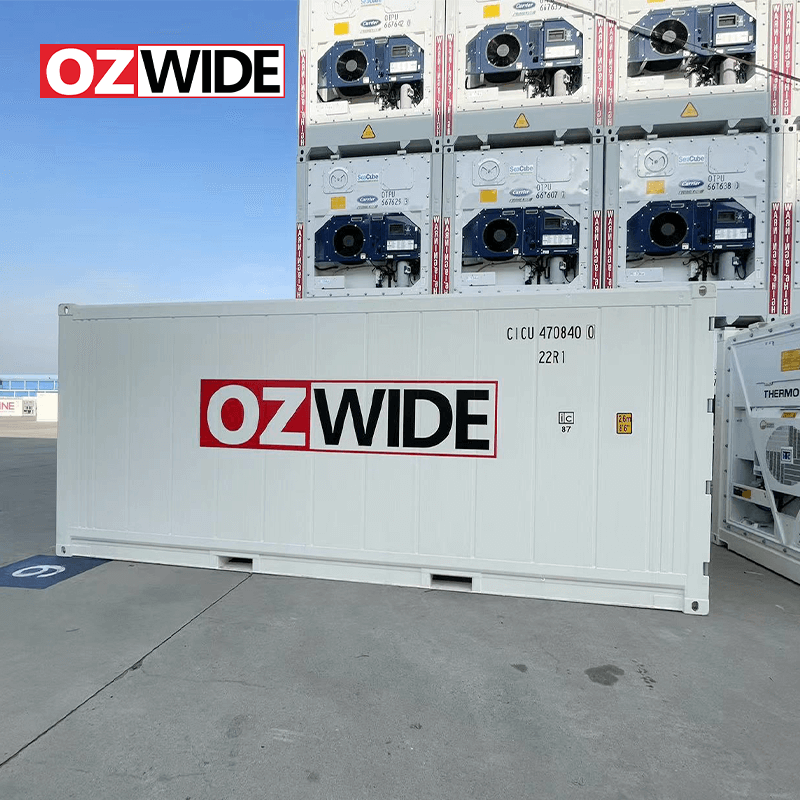
Expanding permanent cold rooms demands massive upfront investment. You must hire specialized contractors, secure zoning permits, and pour insulated concrete foundations. This traditional process heavily disrupts ongoing warehouse operations. Dust, noise, and rerouted forklift traffic kill productivity. Many growing companies simply lack the physical square footage to build permanent extensions. You need a faster way to handle inventory spikes.
Modular units fundamentally change this equation. Compare the fixed, sunk costs of internal facility expansion against leasing mobile refrigeration units. You gain incredible operational flexibility. You can scale up capacity seamlessly during peak holiday seasons. When the rush subsides, you simply return leased units to scale down. This elasticity protects your cash flow. Businesses only pay for the chilling capacity they actively use.
However, implementation requires careful site preparation. We often see buyers treat these units as magic boxes. While they are essentially plug-and-play, they demand specific environmental conditions. You must place them on perfectly leveled ground. Uneven surfaces cause the heavy steel frames to torque. A twisted frame prevents the insulated doors from sealing properly, which destroys cooling efficiency.
Power supply presents another critical implementation reality. Commercial Container Cold Storage requires heavy-duty electrical infrastructure. Standard wall outlets will not work. Most units run on 3-phase, 460V power to drive their industrial compressors. You must ensure your facility has adequate electrical panels or secure dedicated diesel generators before delivery.
The food and agricultural sectors face brutal operational challenges regarding timing. Harvests wait for no one. Distributors routinely handle seasonal harvest gluts. Supermarkets face temporary inventory surges around major holidays. Staging temperature-sensitive exports safely is a constant battle. You must manage these influxes without ever breaking the cold chain.
Different agricultural segments use modular refrigeration in distinct ways. Let us look at specific deployment use cases:
Agribusiness: Farmers deploy field-adjacent cooling units immediately after harvest. Removing "field heat" from crops within hours doubles or triples their retail shelf life.
Meat & Dairy: Processing plants utilize deep-freeze capabilities during massive inventory overflows. This ensures strict USDA and FDA compliance when internal freezer rooms reach maximum capacity.
Seafood Exports: Docks rely on blast-freezer units to instantly freeze fresh catches. This halts bacterial growth before the product ever boards a cargo ship.
When evaluating units for food storage, you must examine specific features to guarantee desired outcomes. Flooring design is critical. Always look for containers featuring T-bar flooring. Standard flat floors block airflow when you stack heavy boxes directly on them. T-bar floors feature extruded aluminum channels. They force cold air to flow underneath and up through the densely packed pallets. This bottom-up circulation prevents localized "hot spots" where food could silently spoil.
Healthcare logistics operate under zero-tolerance conditions. Storing high-value, sensitive materials like vaccines, biologics, and blood plasma carries immense pressure. A temperature deviation of just two degrees can ruin entire batches. These excursions routinely result in complete inventory write-offs costing millions of dollars. The stakes are profoundly higher than in standard retail.
Hospitals and clinics use modular units to solve critical space shortages. Facilities deploy them for hospital overflow storage during crises. Regional health departments use them as localized distribution hubs for massive vaccine rollouts. Manufacturers use them as highly secure staging areas for raw chemical precursors before compounding.
Security and compliance drive pharmaceutical evaluation dimensions. You cannot use a basic agricultural unit for vaccines. The industry relies on highly regulated standards.
Feature Dimension | Standard Agricultural Unit | Pharmaceutical Grade Unit |
|---|---|---|
Cooling Systems | Single compressor setup | Dual-redundant cooling systems |
Monitoring | Manual daily checks | Remote telemetry & digital logging |
Compliance | Basic FDA sanitation | Strict GMP and CFR Part 11 |
Security | Standard padlock latches | Restricted access with lock boxes |
To meet Good Manufacturing Practice (GMP) standards, units require continuous digital temperature logging. Auditors demand unbroken data trails to prove efficacy. Physical security is equally vital. Highly restricted placement, heavy-duty lock boxes, and biometric access controls prevent unauthorized tampering with critical supplies.
Urban commercial spaces face a unique operational challenge: a severe lack of physical space. Supermarkets encounter massive holiday inventory spikes but cannot push their building walls out. Large-scale catering events and outdoor music festivals require localized, temporary cold storage. They often must fit this capacity into alleys, loading docks, or tight parking lots.
A 20ft Container Cold Storage unit is often the perfect strategic choice here. It provides incredible agility. A 20ft unit fits neatly into two standard vehicle parking spaces. Despite its compact footprint, it easily holds up to eight standard pallets of inventory. This density allows urban retailers to double their backroom refrigeration without violating property lines.
Successful retail rollouts require specific situational awareness. You must consider environmental impact. Heavy-duty compressor motors are inherently loud. When placing units in customer-facing areas or retail spaces abutting residential zones, noise mitigation becomes essential. You may need acoustic baffles or specialized quiet-scroll compressors to comply with local noise ordinances.
Staff safety and accessibility dictate door configurations. High-traffic hospitality environments require quick access. Standard shipping container doors are incredibly heavy and require two hands to operate. We highly recommend retrofitting units with easy-open butcher doors. Furthermore, internal safety release mechanisms are non-negotiable. During chaotic catering events, staff members can accidentally become locked inside. Glow-in-the-dark internal emergency releases prevent tragic accidents.
Manufacturing environments deal with highly sensitive compounds. Certain industrial adhesives, epoxies, synthetic resins, and aerospace composites require precise thermal management. They must remain at exact chilled or ambient temperatures. If they grow too warm, they suffer premature curing. If they freeze, they face dangerous chemical degradation. Controlling this environment is a core manufacturing requirement.
Facilities often use modular refrigeration to isolate these volatile materials. Storing them away from the main manufacturing floor reduces severe contamination risks. It vastly improves overall worker safety by containing odorous or toxic off-gassing. If a chemical spill occurs, it remains confined within a steel box rather than spreading across a bustling factory floor.
Safety protocols dominate the evaluation dimension here. We must address a common, dangerous misconception. Standard refrigerated containers are not automatically explosion-proof. They contain sparking electrical contactors and unprotected fan motors. Storing highly volatile, flammable, or combustible materials requires specialized modifications. You must procure ATEX-certified (Atmosphères Explosibles) units. These specialized units feature sealed wiring, spark-proof fans, and intrinsically safe sensors to prevent catastrophic ignition.
Choosing the correct unit requires a structured approach. You must align physical dimensions, thermal capabilities, and infrastructure readiness. Ignoring any of these pillars leads to failed deployments.
First, evaluate your sizing and footprint constraints. You must choose between 20ft and 40ft units. A 20ft unit offers agility and fits into incredibly tight spaces. A 40ft unit maximizes your pallet capacity for high-volume storage. Measure your turning radius carefully. Delivery trucks need ample space to maneuver and drop the units.
Second, define your exact temperature range requirements. The industry separates units into distinct categories:
Chillers: Designed to maintain temperatures strictly above freezing (e.g., fresh produce, dairy).
Freezers: Capable of holding sub-zero temperatures (e.g., meat, frozen goods).
Ultra-Low Freezers: Specialized units for advanced pharmaceuticals reaching -40°F or lower.
Third, aggressively audit your power and site readiness. We must transparently address the highest adoption risk: power failure. Do not assume your building can handle the electrical load. Detail your requirement for dedicated transformers early in the planning phase. If facility power is insufficient, you must secure continuous industrial generators. Without reliable power, your investment becomes a warm steel box.
Finally, apply clear logic to your lease versus own decision. We recommend following a standardized action path:
Deployment Scenario | Recommended Action | Primary Benefit |
|---|---|---|
Holiday Inventory Spikes | Short-term lease (1-3 months) | No capital tie-up; unit leaves when done. |
Summer Music Festivals | Short-term lease (Weekly) | Extreme flexibility; zero maintenance overhead. |
Permanent Agricultural Expansion | Purchase / Capital Lease | Builds asset equity; lowers monthly run rate. |
Ongoing Manufacturing Isolation | Long-term lease (1-3 years) | Predictable OpEx; includes vendor maintenance. |
Refrigerated containers are no longer just a temporary compromise. They represent a highly strategic asset for agile, modern supply chain management. By matching the right unit to your specific industry requirements, you can protect sensitive inventory while completely avoiding the headaches of permanent construction.
Your next steps require precise physical planning. Conduct a thorough site audit of your property today. You must measure your available footprint accurately. Verify that your electrical panels support 3-phase, 460V power. Calculate the exact volume of pallets you need to store during peak operations to determine your size requirements.
Do not guess on these critical specifications. Contact a cold storage specialist to map your exact temperature tolerances, spatial limits, and power availability. Getting a tailored quote ensures you deploy a secure, compliant, and highly efficient chilling solution for your business.
A: Standard units typically maintain temperatures ranging from -20°F to +70°F. The exact range depends heavily on the manufacturer, the age of the compressor, and the specific refrigerant used. Specialized ultra-low pharmaceutical units can reach temperatures much colder, but standard commercial units easily handle deep-freeze requirements for food and ice.
A: Yes, it absolutely does. Standard commercial units require a 3-phase, 460V power supply to run their industrial compressors efficiently. While some modified single-phase units exist for residential or light commercial use, they offer significantly limited cooling capacity and struggle to recover temperatures quickly when doors open frequently.
A: This requires a nuanced approach. Municipalities typically classify shipping containers as temporary structures, which bypasses traditional building permits. However, local zoning laws, industrial park regulations, and HOA rules heavily dictate placement duration, property line setbacks, and visual screening requirements. Always check with local code enforcement before scheduling a delivery.
A: Most units feature specialized T-bar aluminum flooring designed for airflow, which has specific load limits. While lightweight forklifts can sometimes enter, heavy machinery can crush the floor channels. You also need a specialized heavy-duty loading ramp to bridge the height gap. Most operators prefer using manual or electric pallet jacks for interior loading.


