close
Choose Your Site
Global
Social Media

Views: 0 Author: Site Editor Publish Time: 2026-07-08 Origin: Site


Global supply chains face unprecedented stakes today. Spoilage risks threaten profit margins constantly across the perishable goods sector. Fluctuating seasonal demands complicate long-term inventory planning. Building permanent refrigerated facilities requires massive capital expenditure. We need a more adaptable solution. Modern reefers provide this exact answer. We no longer view them simply as transit vehicles. Today, they operate as deployable, modular assets. You can use them seamlessly for global maritime shipping or on-site commercial storage. This operational flexibility changes how businesses manage climate-sensitive inventory. This article serves as a practical evaluation guide. Supply chain and procurement leaders face tough infrastructure choices daily. We will help you navigate these complex decisions. You will learn how to accurately compare modular refrigerated units against traditional cold warehousing.
Containerized cold storage offers a scalable, OpEx-friendly alternative to permanent facility construction.
Selecting between 20ft and 40ft units depends strictly on volume requirements, site footprint, and power infrastructure availability.
Modern telematics and IoT integration make reefers viable for highly regulated industries (e.g., pharmaceuticals, perishable foods) requiring precise audit trails.
Implementation success hinges on anticipating hidden deployment risks, including three-phase power requirements and site grading.
Procurement teams constantly evaluate how to store temperature-sensitive goods efficiently. The choice usually boils down to building permanent facilities or utilizing modular alternatives. Integrating Container Cold Storage fundamentally shifts how companies allocate financial resources. It moves the burden from capital expenditure to operational expenditure.
Building a permanent cold room requires a heavy upfront investment. You must purchase land, secure permits, and hire specialized contractors. Construction timelines often stretch across multiple years. This delay leaves businesses vulnerable to immediate market shifts. Agile lease or buy models offer a stark contrast. Businesses can deploy modular reefers in a matter of weeks. They avoid massive sunk costs and preserve cash flow for core operations.
Volume volatility also dictates storage strategies. Agricultural yields fluctuate wildly during seasonal harvest peaks. Supply chain bottlenecks can suddenly strand inventory at ports. Containerized units allow businesses to scale capacity rapidly. You simply bring in extra units during peak seasons. When demand drops, you return the leased equipment. Permanent warehouses sit half-empty during slow periods, draining utility budgets.
Asset portability provides another massive strategic advantage. Traditional warehouses remain fixed to one geographical location. Markets shift, and distribution needs evolve over time. Modular assets move seamlessly. You can relocate these units closer to active ports. You can shift them to regional distribution hubs. You can even deploy them at temporary construction or project sites. This physical flexibility ensures your storage capacity always aligns perfectly with current business needs.
Chart: Strategic Comparison of Storage Models
Evaluation Metric | Traditional Warehousing | Modular Refrigerated Units |
|---|---|---|
Financial Model | CapEx (High upfront investment) | OpEx (Agile leasing/buying) |
Deployment Speed | 12 to 24 months | 1 to 4 weeks |
Capacity Scaling | Fixed and inflexible | Highly elastic (add/remove units) |
Asset Mobility | Stationary | Fully portable globally |
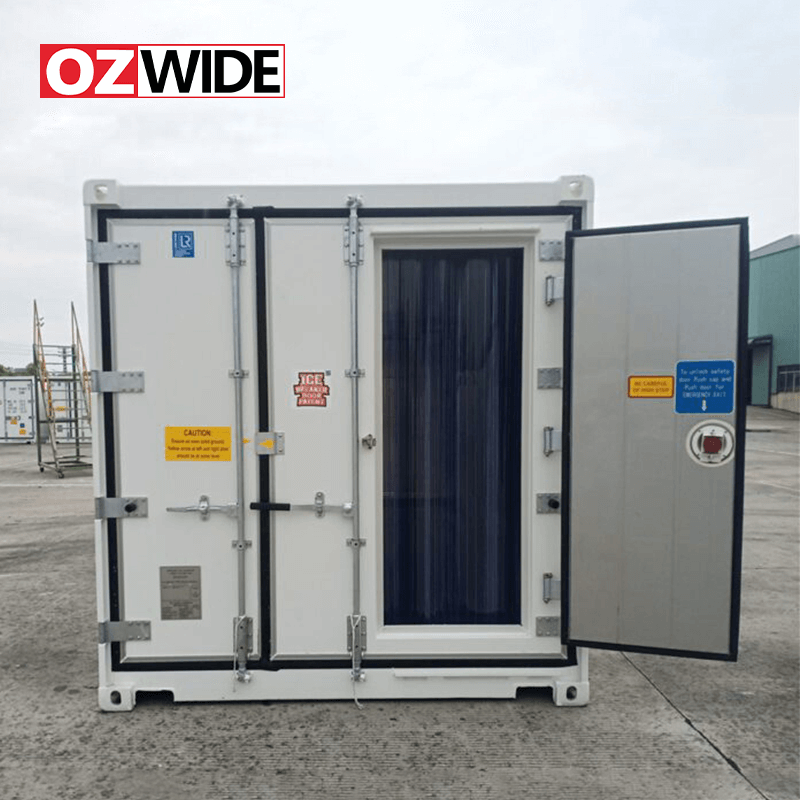
Evaluating modern refrigeration technology requires a deep understanding of thermal mechanics. The industry standard demands extreme versatility. Most high-grade units maintain target temperatures ranging between -30°C and +30°C. This broad spectrum accommodates everything from deep-frozen seafood to ambient-temperature pharmaceuticals.
Compressor technology dictates the reliability of these cooling mechanisms. Older models relied on reciprocating compressors. Modern systems utilize advanced scroll compressors instead. Scroll compressors feature fewer moving parts. This design minimizes mechanical wear over time. They operate quietly and deliver consistent cooling power even under extreme external conditions.
Energy efficiency drives major procurement decisions today. Automated temperature controls regulate power consumption intelligently. The system dials back energy usage once it reaches the internal setpoint. Newer eco-friendly refrigerants further enhance environmental performance. They possess significantly lower Global Warming Potential (GWP) ratings. Using these modern refrigerants helps enterprises meet strict corporate sustainability mandates. We also evaluate the Life Cycle Assessment (LCA) of the equipment. A favorable LCA proves the environmental viability of the asset from manufacturing through disposal.
Telematics and remote monitoring redefine operational security. We no longer view IoT integration as an optional luxury. It stands as a critical evaluation standard for any enterprise-grade deployment. Modern sensors track internal conditions continuously. They monitor both temperature and ambient humidity. The system sends real-time alerts directly to management dashboards if deviations occur. This immediate visibility prevents catastrophic inventory loss before it happens.
Selecting the correct unit size determines overall logistics efficiency. A standard 20ft unit works well for limited urban spaces. However, large-scale operations usually require a 40ft Container Cold Storage unit. We must look closely at capacity benchmarks to understand the difference.
A typical 20ft unit holds roughly 10 standard pallets. Its internal volume maxes out around 28 cubic meters. The 40ft variant doubles this operational capacity. It easily accommodates up to 20 standard pallets. The cubic volume expands to approximately 67 cubic meters. This massive jump in capacity drastically reduces the per-pallet shipping cost.
The footprint-to-yield ratio heavily favors the larger units. A 40ft footprint occupies more physical ground space. Yet, the internal storage yield scales disproportionately well. Large-scale maritime transport depends on this spatial efficiency. High-volume distribution centers maximize their yard space by deploying the longest possible units. They pack more revenue-generating cargo into a single power footprint.
Multi-unit configurations present a compelling alternative to permanent facilities. You might assume building a single, massive cold room is more efficient. Real-world operations prove otherwise. Staging multiple 40ft units side-by-side provides unparalleled redundancy. If one unit suffers a mechanical failure, you only lose a fraction of your capacity. You can quickly transfer the affected goods into the neighboring units. A single massive warehouse offers no such fail-safe. If the central chiller goes down, the entire facility faces catastrophic inventory loss.
Transporting high-stakes cargo requires absolute precision. The pharmaceutical and biochemical sectors operate under stringent regulatory standards. Modern reefers must comply seamlessly with Good Manufacturing Practices (GMP). They must also adhere strictly to global FDA guidelines. Failing an inspection results in immediate product destruction.
To maintain compliance, you must establish rigorous operational protocols. We follow a strict methodology to validate these environments.
Design Qualification: Verify the equipment specifications meet the required product temperature ranges exactly.
Thermal Mapping: Place sensors throughout the empty unit to identify potential hot or cold spots.
Calibration Checks: Ensure all built-in thermostats align perfectly with external, NIST-traceable calibration devices.
Performance Qualification: Test the loaded unit under stress conditions to confirm it holds the setpoint.
Audit trails serve as the backbone of modern regulatory compliance. You cannot simply claim the goods stayed cold. You must prove it definitively. Data logging systems capture historical temperature records every few minutes. These logs demonstrate unbroken cold chain integrity. Customs officials and quality assurance auditors demand these records during clearance. Cloud-connected telematics systems automatically generate these vital compliance reports.
Procurement teams must carefully evaluate redundancy protocols for zero-tolerance cargo. Vaccines and high-value perishables spoil quickly if temperatures deviate. Operational fail-safes are non-negotiable. Teams assess backup power requirements extensively. Dual-compressor systems provide an excellent mechanical safety net. If the primary compressor fails, the secondary takes over instantly. This level of redundancy secures multi-million dollar pharmaceutical shipments against mechanical unpredictability.
Deploying modular infrastructure sounds deceptively simple on paper. The reality on the ground often involves unforeseen logistical hurdles. We must maintain a realistic, objective view of the deployment process. Anticipating hidden rollout risks separates successful projects from costly failures.
Site preparation hurdles derail many deployments early on. You cannot drop a multi-ton asset on soft dirt. The physical requirements dictate absolute precision. The ground must be perfectly level to ensure proper door alignment. The surface must bear immense weight without sinking over time. Concrete pads or specialized steel dunnage provide the best foundation. Furthermore, you must plan for adequate water drainage. Defrost cycles produce significant condensation. Without proper drainage, ice pools around the equipment, creating severe safety hazards.
Power infrastructure constraints represent the biggest hidden cost. These units do not plug into standard wall outlets. They require dedicated 3-phase, 460V power supplies. Many commercial sites lack this specific electrical architecture. You must upgrade your transformers and lay heavy-duty cabling. These electrical upgrades cost thousands of dollars and require municipal permits. If grid power remains unavailable, you must rely on continuous diesel generators. This introduces extreme fuel costs and daily refueling logistics.
We must also acknowledge preventative maintenance realities. These units feature incredibly robust engineering. However, moving parts eventually wear out. Evaporators collect ice and dust. Condensers clog with environmental debris. You must schedule regular maintenance to prevent catastrophic failure.
Skipping coil cleanings: Dirty condenser coils force the compressor to work harder, accelerating mechanical breakdown.
Ignoring door seals: Damaged gaskets allow warm air inside, causing aggressive ice buildup on the evaporator.
Neglecting pre-trip inspections: Failing to run automated diagnostics before loading cargo leads to mid-transit spoilage.
Blocking airflow: Stacking pallets too high restricts air circulation, creating dangerous temperature variations.
Maritime refrigerated containers have evolved dramatically over the last decade. They are no longer just basic shipping tools moving cargo across oceans. They stand today as viable, enterprise-grade storage alternatives. They offer unparalleled scalability, impressive asset mobility, and robust climate control.
Your shortlisting logic must remain grounded in operational reality. Before issuing any RFPs for lease or purchase, conduct a thorough internal audit. Assess your site's power infrastructure capabilities carefully. Analyze your peak volume volatility to determine exact capacity needs. Review your compliance requirements if handling pharmaceutical or food-grade inventory.
Take proactive steps today to secure your cold chain operations. We highly recommend consulting directly with a cold storage logistics specialist. You should request a specific site audit to identify any hidden deployment risks early. Secure a detailed quote to accurately compare this modular approach against your existing permanent infrastructure.
A: Power consumption typically ranges between 15 kWh and 30 kWh per day. This variance depends heavily on ambient outside temperatures and your target internal setpoint. Deep freezing requires significantly more power than ambient cooling. Remember that frequent door openings spike consumption as the compressor works harder to recover lost cold air.
A: Yes, you can deploy them indoors. However, you must implement proper exhaust ventilation. The container's condenser unit generates substantial heat during operation. If placed inside a closed warehouse without exhaust extraction, the ambient room temperature will rise drastically. This eventually causes the equipment to overheat and fail.
A: The decision depends on your timeframe and available CapEx. Renting is ideal for seasonal harvest surges, short-term testing, or unpredictable temporary projects. Buying makes better financial sense for permanent capacity expansions lasting longer than two years. Purchasing provides long-term asset equity if you have the upfront capital.
A: Modern units offer exceptional precision. The industry standard maintains internal temperatures within +/- 0.5°C to 1°C of the programmed setpoint. This high level of accuracy easily validates their use for strict pharmaceutical cold chains, biochemical transport, and highly sensitive food-grade storage applications.


