close
Choose Your Site
Global
Social Media

Views: 0 Author: Site Editor Publish Time: 2026-07-03 Origin: Site


Global supply chains face unprecedented operational strain right now. Rigid, permanent warehousing struggles to adapt to these rapid market shifts. Unpredictable demand spikes often overwhelm outdated distribution networks. Market leaders require infrastructure capable of pivoting instantly. Enter Modular Cold Storage as a long-term, strategic asset. It functions far beyond a mere temporary stopgap. Instead, it fundamentally transforms transport, logistics, and temperature-sensitive production workflows. You gain immediate agility where permanence once slowed down your operations. This article provides a comprehensive evaluation framework for operations leaders. We want to help you decide if, when, and how to transition safely. You will learn the critical financial drivers and technical compliance standards involved. By the end, you will understand exactly how to implement this flexible model successfully across your network.
Agility over Permanence: Modular cold stores replace multi-year construction timelines with deployment measured in weeks, mitigating supply chain bottlenecks.
Financial Flexibility: The model allows businesses to shift from heavy capital expenditure (CapEx) to adaptable operational expenditure (OpEx), scaling capacity alongside seasonal or market demand.
Compliance Without Compromise: Next-generation containerized cold rooms meet strict pharmaceutical (GDP) and food safety (HACCP) standards, rivaling traditional builds in temperature precision.
Implementation Reality Check: While highly flexible, successful deployment requires rigorous site preparation, power load planning, and proactive permitting.
Building traditional warehouses carries immense financial and operational risk today. Companies face prohibitive upfront costs before breaking ground. Permitting and construction often take 12 to 18 months. During this waiting period, market dynamics frequently change. You might build a permanent facility in a location rapidly losing relevance. Fixed assets simply cannot relocate if customer demands shift elsewhere. This rigidity creates severe supply chain bottlenecks.
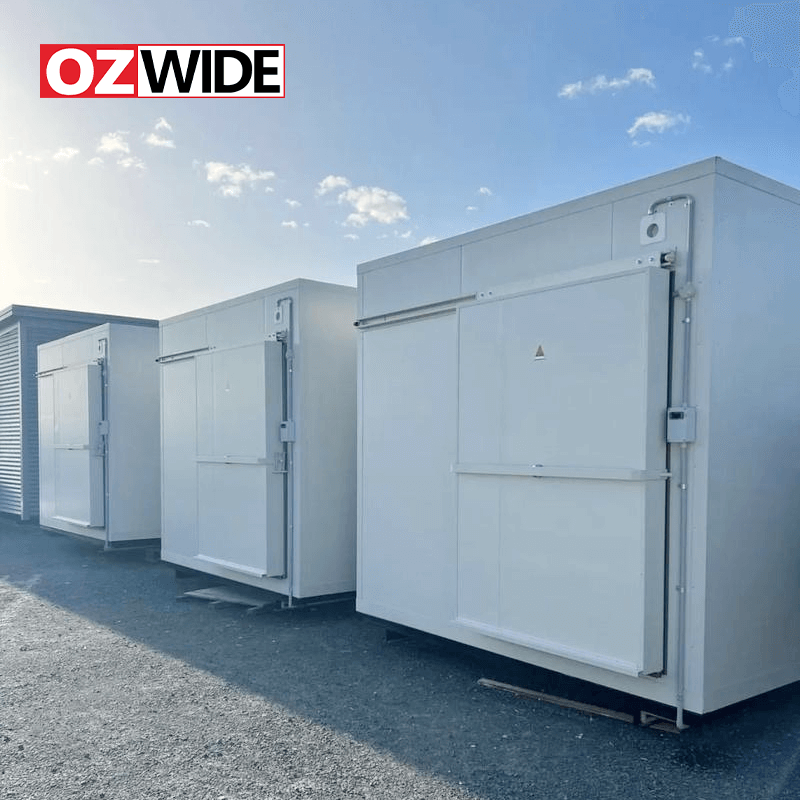
A modern Modular Cold Storage approach solves this exact bottleneck. Engineers construct these units in controlled factory environments. They bypass typical weather delays and site construction hurdles entirely. You can deploy them as relocatable, strategic assets. When a regional distribution center needs sudden capacity, you just drop a unit in. You can move it across the country next year if needed.
Several macro factors drive this shift toward flexible infrastructure. Unpredictable inventory surges force companies to adapt rapidly. E-commerce growth demands highly decentralized distribution networks. Consumers expect faster deliveries of perishable goods. You need smaller facilities located closer to the final mile. Modular units fit perfectly into these dispersed network strategies.
Evaluation Metric | Traditional Build | Modular Cold Store |
|---|---|---|
Deployment Speed | 12 to 18 months | 4 to 8 weeks |
Asset Mobility | Fixed to location | Fully relocatable |
Scalability | Hard and costly to expand | Add or remove units easily |
Financial Model | Heavy Capital Expenditure | Flexible Operational Expenditure |
Speed-to-revenue defines modern logistics success. Deploying a Modular Cold Storage unit takes only 4 to 8 weeks. Conversely, waiting for a permanent facility stalls your growth for over a year. You start capturing revenue almost immediately under the modular model. Faster deployment means you fulfill lucrative contracts sooner. This rapid turnaround delivers a massive financial advantage over slower competitors.
Scalability forms the next critical evaluation dimension. Traditional facilities force you to build for maximum projected capacity. You end up cooling empty space during slow seasons. Modular solutions allow you to link capacity directly to seasonal peaks. You simply lease or purchase additional units when demand spikes. Once the peak ends, you return or relocate the extra units. You never pay for unused, chilled air again.
Financial models also shift favorably for large organizations. You can choose between outright purchase and long-term leasing. Mid-to-large enterprises often prefer shifting expenses. Heavy capital expenditure strains balance sheets unnecessarily. Adaptable operational expenditure frees up valuable cash flow. Leasing units treats them as an operational expense. This strategic accounting move preserves capital for core business investments.
You must demand rigorous technical specifications from any prospective solution. Temperature stability remains non-negotiable for sensitive goods. Many operations require dual-temperature zones inside a single footprint. Rapid pull-down times ensure newly loaded products reach safe temperatures quickly. Tight variance control prevents devastating spoilage. This precision is absolutely crucial for vaccine logistics or perishable food storage.
Energy efficiency directly impacts your monthly overhead. Modern units must utilize advanced insulation materials to minimize heat transfer. Polyisocyanurate (PIR) panels offer exceptional thermal resistance. Efficient compressor technology reduces power consumption significantly. You should expect baseline standards matching or exceeding permanent builds.
Regulatory compliance guarantees product safety and legal market access. You must verify alignment with industry-specific mandates. The FDA enforces strict guidelines for pharmaceutical storage. Food handlers must adhere to HACCP principles globally. Good Distribution Practice (GDP) standards apply across pharmaceutical logistics. A premium solution meets these frameworks effortlessly.
Telemetry and remote monitoring prevent catastrophic inventory loss. You cannot rely on manual temperature checks anymore. Integrated IoT sensors provide continuous oversight. They trigger real-time alerts via SMS or email if fluctuations occur. Automated temperature logging simplifies compliance audits tremendously. You always have precise historical data ready for inspectors.
High-density PIR insulation panels for maximum thermal retention.
Redundant cooling circuits to prevent catastrophic failures.
Integrated IoT temperature probes for real-time monitoring.
Audible and visual alarm systems for on-site personnel.
Dual-zone partitioning capabilities for mixed inventory.
Many vendors sell a myth of effortless plug-and-play installation. The reality requires rigorous site preparation and detailed planning. Electrical infrastructure often becomes the first major hurdle. These powerful refrigeration units draw substantial electrical current. You must ensure access to stable 3-phase power. Direct hardwiring is usually mandatory for safe, continuous operation. Furthermore, you must integrate backup generators to prevent losses during grid failures.
Your site footprint needs careful civil engineering attention. You cannot simply place heavy equipment on soft dirt. Structural prerequisites include perfectly level surfaces. Concrete pads offer the best weight-bearing foundation. Uneven settling causes door seals to misalign over time. Failed seals let warm air infiltrate easily. You must also plan for proper drainage. Condensation runoff creates severe slip hazards or degrades the surrounding soil.
Permitting and zoning represent common blind spots for logistics teams. Do not assume temporary structures bypass local laws. You must navigate municipal codes carefully. Compressors generate noise, triggering local decibel restrictions. Setback requirements might dictate how close units sit near property lines. Proactive planning prevents these bureaucratic issues from delaying your deployment.
Conduct a formal electrical load assessment at your facility.
Pour and cure a perfectly level concrete foundation pad.
Install appropriate drainage channels for defrost cycle runoff.
Submit comprehensive site plans to local zoning boards early.
Schedule rigorous pre-deployment testing for backup generators.
Selecting the right vendor determines your long-term success. You must scrutinize their Service Level Agreements (SLAs) deeply. Evaluate their localized repair capabilities carefully. If a compressor fails, you need emergency response times measured in hours, not days. Ask about their preventative maintenance schedules. Proactive servicing extends equipment life and protects your valuable inventory.
You will face a choice between customization and standardization. Off-the-shelf containerized rooms offer the fastest delivery times. They work perfectly for standard pallet sizes. Bespoke modular builds allow tailored dimensions. You can optimize the internal racking layout specifically for your unique product flow. However, custom builds require slightly longer lead times. You must balance speed against spatial efficiency.
Never commit to a multi-unit deployment blindly. We highly recommend structuring a rigorous Proof of Concept (PoC). Launch a pilot program at a single facility first. Monitor the temperature stability and energy draw closely. Test the vendor’s support responsiveness in real-time scenarios. A phased rollout minimizes operational risk across your entire logistics network.
Supply chain agility requires adaptable infrastructure. Modular solutions represent the logical evolution for growing businesses. They consistently outpace traditional construction in speed and flexibility. You secure rapid deployment without sacrificing vital compliance or temperature precision. Moving away from rigid facilities protects your operations against unpredictable market shifts.
Operations leaders must take proactive steps today. Audit your current capacity gaps across all facilities. Conduct a thorough site feasibility assessment for potential modular locations. Identify areas where seasonal peaks heavily strain your existing logistics network. You can solve these bottlenecks efficiently.
Do not wait for the next supply chain crisis. Request a technical consultation to explore your specific options. Calculate the potential return on investment for your unique scenario. Submit a request-for-quote (RFQ) today to start planning your modern infrastructure upgrade.
A: A high-quality modular unit typically lasts 15 to 20 years. Durability depends heavily on routine preventative maintenance. Regular servicing of compressors and door seals extends this lifecycle significantly. These robust structures withstand heavy daily use just like permanent facilities.
A: Yes, they are designed for harsh outdoor environments. They feature specific weatherproof ratings and heavy-duty roof reinforcements. Advanced insulation maintains internal temperatures despite extreme ambient heat or freezing outside conditions. You can operate them safely year-round.
A: You have multiple options. Basic ISO container conversions stick to standard shipping dimensions. Expandable, panel-built modular rooms offer complete customization. You can tailor the footprint, height, and layout to fit specific pallet racking requirements perfectly.
A: Often, yes. Even though they classify as temporary or relocatable structures, local laws vary. You must check municipal zoning regulations regarding setbacks and noise levels. Proactive consultation with local authorities prevents unexpected delays or fines.


