close
Choose Your Site
Global
Social Media

Views: 0 Author: Site Editor Publish Time: 2026-06-02 Origin: Site


Cargo spoilage during long-haul transit poses a compounding financial and compliance risk. It represents far more than a simple logistical inconvenience. Supply chains lose millions annually when degraded shipments fail quality inspections. You cannot afford to treat thermal integrity as an afterthought.
Maintaining product freshness over several weeks requires more than static refrigeration. You need dynamic climate management to prevent destructive thermal fluctuations. Without precise controls, micro-climates rapidly destroy sensitive goods. Passive systems simply cannot adapt to volatile external environments.
Advanced Container Cold Storage serves as the definitive solution to mitigate product shrink. It ensures strict regulatory compliance across borders. This technology protects delicate margins during global transit. Readers will discover the core mechanics and operational strategies necessary for unbroken cold chain management.
Container cold storage systems function by maintaining pre-cooled cargo temperatures through continuous, precise airflow and humidity control, rather than actively cooling warm goods.
An unbroken cold chain relies on four critical phases: protocol-driven pre-cooling, strategic stowage, active telematics monitoring, and seamless power handoffs.
Procurement evaluation must prioritize data transparency (API integration), redundancy (backup power/gensets), and verifiable compliance with international food safety standards (e.g., USDA/FSIS guidelines).
Ignoring routine maintenance and sensor calibration leads to micro-fluctuations in temperature, which exponentially accelerate produce respiration and pharmaceutical degradation.
Fresh produce continuously respires after harvesting. This biological process generates internal heat. Time accelerates organic degradation whenever micro-climates form inside standard shipping units. Ethylene gas accumulates in stagnant air pockets. This gas triggers rapid, uncontrolled ripening across entire pallets. Pharmaceuticals exhibit extreme thermal sensitivity during transit. Even minor ambient temperature shifts compromise their complex chemical integrity. Biological degradation never pauses during ocean voyages.
Standard insulation fails over extended durations. Passive cooling methods cannot adapt to sudden external temperature spikes. Sub-standard setups inevitably lead to rejected loads at destination ports. They drastically reduce viable retail shelf-life. Compliance failures quickly follow these thermal breaches. Regulatory bodies penalize shipments lacking proper thermal documentation. Relying on basic logistics creates unacceptable financial exposure.
Global transit requires rigorous performance baselines. Zero temperature excursions define a successful maritime deployment. We must secure verifiable audit trails for every shipment hour. You need maximum viable shelf-life upon arrival to satisfy retail partners. High-grade equipment guarantees these specific outcomes. You eliminate guesswork from intercontinental shipping.
Controlled Atmosphere (CA) technology transforms long-haul transport capabilities. Modern units actively balance oxygen and carbon dioxide levels internally. They synchronize these gases alongside precise baseline temperature control. This harmony actively slows the cellular ripening process of fresh freight. CA systems scrub excess carbon dioxide from the air. They inject nitrogen to displace oxygen when necessary. This precise gas management puts organic cargo into a dormant state.
Standard cooling merely pushes air downward from the ceiling. Advanced systems utilize engineered bottom-up air delivery instead. Variable frequency drives (VFDs) automatically adjust internal fan speeds. They eliminate isolated hot spots inside the unit. The steady circulation cools the entire payload evenly. It achieves this without dehydrating the organic cargo. VFDs match their output to the specific thermal load required.
Internal condensation creates significant transit risks. Excessive moisture breeds aggressive fungal growth on fresh produce. It also compromises the structural integrity of cardboard packaging. Modern systems automatically regulate internal humidity levels continuously. They extract excess moisture to maintain perfect ambient conditions. The hardware utilizes specific psychrometric parameters to prevent saturation points.
Feature | Standard Refrigeration | Controlled Atmosphere (CA) |
|---|---|---|
Airflow Delivery | Top-down, static fan speeds | Bottom-up, variable frequency drives (VFDs) |
Gas Management | None (ambient air only) | Active O2 and CO2 balancing |
Humidity Control | Passive (prones to condensation) | Active dehumidification algorithms |
Primary Use Case | Short-haul frozen goods | Long-haul sensitive fresh produce |
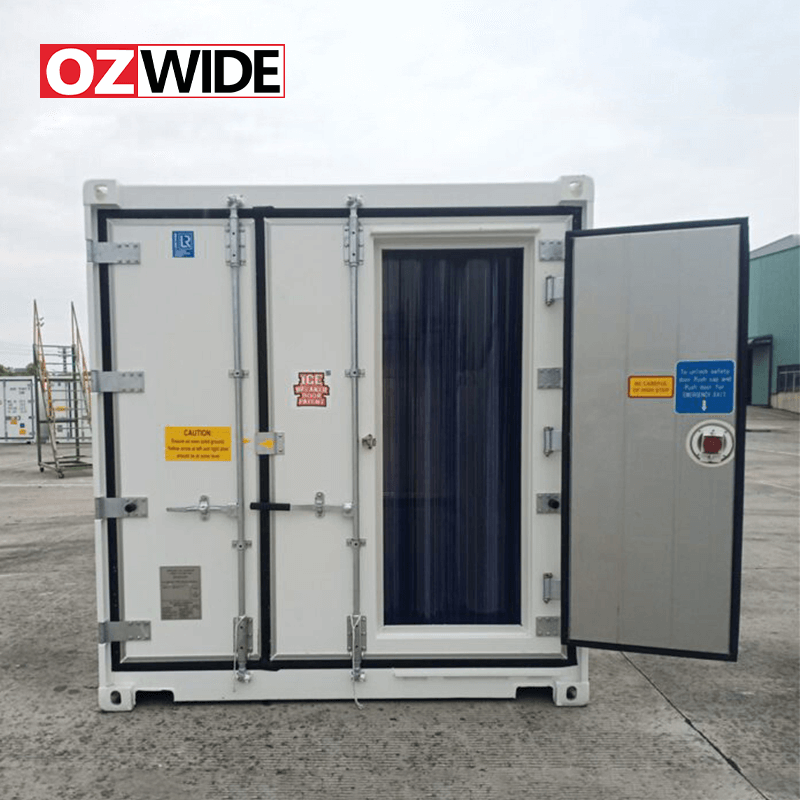
Many wrongly assume shipping units actively chill cargo. This is a dangerous industry misconception. Cargo must reach its exact transit temperature before loading begins. Dedicated Container Cold Storage only maintains pre-existing thermal states. Attempting to freeze warm goods overwhelms the mechanical compressors. Proper pre-cooling removes latent heat from the product core. It prevents the hardware from working beyond its designated capacity.
Poor stowage immediately negates advanced hardware capabilities. You must respect the unit's red load line strictly. Goods cannot block critical overhead air circulation paths. Operators must utilize T-bar flooring channels correctly. Proper alignment ensures uniform bottom-up airflow across all pallets. Shrink-wrap must not drape over the floor grooves. Obstructing these channels creates immediate thermal dead zones.
Intermodal transfers create critical vulnerability windows. Moving units from delivery trucks to ports disrupts electrical power. Moving from staging ports to ocean vessels causes similar gaps. You must utilize underslung or clip-on generator sets (gensets). These devices maintain continuous power during all transitional phases. They bridge the gap between grid connections.
Passive data loggers offer only retrospective insights. They cannot prevent cargo spoilage while in transit. Active telematics provide real-time visibility into internal conditions. Operators receive instant alerts for immediate intervention. The hardware transmits ambient temperatures and probe data continuously. It alerts terminal staff before an excursion damages the load.
Transparency dictates modern supply chain success. Procurement teams must demand robust data logging capabilities. The system should feed real-time temperature data directly into enterprise software. Location and humidity metrics must sync via automated API integrations. You need immediate access to structured JSON or REST data streams. Manual data retrieval creates unacceptable delays.
Mechanical failures remain a constant logistical threat. You must evaluate units for robust backup mechanisms.
Dual-sensor configurations: They provide necessary secondary validation for sensitive loads.
Automated alarm systems: They trigger instantly during unexpected power failures.
Backup cooling loops: They maintain baseline temperatures while technicians perform repairs.
Battery backups for telematics: They ensure continuous data transmission even during main power loss.
Hardware must meet stringent international audit requirements. Software reporting tools require equal scrutiny from compliance officers. Systems must align fully with FSIS and USDA operational standards. They should support FDA FSMA documentation rules seamlessly. Pharmaceutical shipments demand strict adherence to global GDP guidelines. Non-compliant data logs lead directly to rejected shipments.
Operational expenditures heavily impact transit profitability. We must compare power draw across different compressor types. Standard scroll compressors consume more baseline electrical power. Advanced digital scroll technology dynamically adjusts its energy consumption. This reduces electrical strain during extended ocean voyages. Highly efficient units lower daily energy consumption substantially.
Sensors inevitably lose calibration over time. Drift creates undetected micro-fluctuations inside the unit. You must establish a strict baseline for maintenance schedules.
Pre-Trip Inspections (PTI): Run comprehensive diagnostic software before every single loading event.
Sensor Recalibration: Perform physical ice-bath calibrations annually to prevent false temperature readings.
Refrigerant Checks: Measure internal pressure levels to detect slow microscopic gas leaks.
Software Updates: Flash the telematics firmware to ensure uninterrupted cellular connectivity.
Hardware damage directly impacts baseline thermal efficiency. Degraded door seals let ambient heat enter the chamber. Blockages in the T-bar floor restrict essential airflow. Broken insulation panels create permanent cold-chain vulnerabilities. Crane operators sometimes dent the outer shell during loading. These structural breaches force the compressor to work harder. Visual inspections must catch these defects early.
Prioritize comprehensive service level agreements (SLAs). Do not select vendors based solely on upfront unit availability. Demand guaranteed access to global repair networks. Verifiable spare parts availability minimizes emergency port downtime. You need guaranteed response times when components fail at sea. Reliable Container Cold Storage partners provide localized technical support at destination ports.
Successful long-haul temperature control merges high-grade hardware with disciplined operational procedures. Proper implementation removes unpredictable transit variables from your supply chain. Pre-cooling and stowage protocols dictate the ultimate success of the equipment.
Decision-makers should prioritize vendors offering transparent telematics and verified API integration. Robust maintenance networks outvalue basic mechanical specifications every time. Redundancy prevents minor mechanical issues from becoming catastrophic cargo losses.
Audit your current intermodal power-handoff protocols immediately. Request a localized trial run utilizing telematics-enabled Container Cold Storage. Validate the API data streams before committing to long-term deployment.
A: The maximum duration depends entirely on the commodity's specific biology. Implementing Controlled Atmosphere (CA) technology extends these transit windows significantly. Delicate berries typically maintain export quality for around 21 days. Hardier produce like apples and citrus can easily exceed 45 days. Proper pre-cooling strictly dictates these maximum timelines.
A: No. These units feature a strict mechanical limitation. They are designed only to maintain core temperatures. They cannot pull down heat from warm cargo efficiently. Attempting to freeze warm goods leads to immediate surface freezing. It causes interior product spoilage and induces severe hardware strain.
A: Modern container ships utilize specialized vessel-based cellular networks. Telematics units rely on localized LoRaWAN networks to gather data safely below deck. The ship then manages GSM and satellite handoffs automatically. This robust infrastructure ensures continuous data transmission back to onshore monitoring centers.
A: The unit's thick insulation R-value provides a temporary thermal buffer. This natural barrier protects cargo for a few hours. Meanwhile, active telematics immediately detect the electrical power loss. The system triggers instant emergency alerts directly to rail operators. This enables rapid intervention before actual temperature excursions occur.


