close
Choose Your Site
Global
Social Media

Views: 0 Author: Site Editor Publish Time: 2026-06-17 Origin: Site


Cold chain procurement carries incredibly high stakes today. A single equipment failure ruins entire shipments and stalls daily operations. Selecting the wrong temperature-controlled asset leads to massive product spoilage. You also risk inflated energy costs and severe logistical bottlenecks. Decision-makers must carefully distinguish between scalable, high-volume holding and agile, localized transport needs. Establishing the right framework ensures you protect your temperature-sensitive inventory from farm to final destination.
We will explore how deploying Container Cold Storage addresses large-scale requirements compared to smaller, modular alternatives. You will discover the operational differences separating these essential technologies. We cover infrastructure demands, mobility constraints, and compliance tracking standards. You will learn how to align asset capabilities directly to your supply chain goals. This clarity helps you navigate complex capital investments and confidently safeguard your temperature-controlled freight.
Capacity & Scale: Reefer containers provide ISO-standardized, high-volume capacity (20ft/40ft), while cold freezer boxes are built for smaller, targeted payloads (pallet or LTL size).
Infrastructure Demands: Reefers require dedicated 3-phase power infrastructure; freezer boxes often utilize standard 110V/220V outlets or passive cooling methods.
Cost Efficiency: Cold freezer boxes offer lower CAPEX for small operations, whereas container cold storage delivers a lower cost-per-cubic-foot for bulk inventory.
Primary Use Case: Choose reefers for international freight and semi-permanent site storage; choose freezer boxes for last-mile delivery and localized, modular storage.
A cold freezer box operates as a modular, highly adaptable enclosure. Manufacturers design these units specifically for smaller-scale transport or temporary holding. They insulate the interior heavily to prevent rapid ambient heat transfer. Operations rely on them when full-sized shipping containers exceed spatial limits or volume needs. You can deploy them inside existing warehouses or mount them onto delivery vehicles.
The cooling mechanism relies on either active or passive systems. Active units use localized refrigeration components. You plug them into standard electrical outlets or power them directly from a vehicle alternator. Passive units operate without moving mechanical parts. They utilize phase change materials, gel packs, or dry ice to maintain internal climates. This passive mechanism provides reliable cooling during transit without constant energy draws.
The physical footprint of a freezer box is highly variable. Some units fit a single shipping pallet perfectly. Others scale down to small parcel shippers for pharmaceuticals. You will also see medium-sized boxes designed for standard truck beds. This variability allows supply chain managers to match the exact dimensional requirements of their payloads.
A reefer container functions as an ISO-standardized shipping vessel. They typically come in 20-foot or 40-foot lengths. Builders equip them heavily to handle massive global freight movements. They feature heavy-duty, integrated refrigeration units built into the front wall. These machines handle extreme ambient environments while crossing oceans or sitting in sun-baked terminal yards.
The operational mechanism depends entirely on active cooling. A reefer requires a continuous external power supply. During maritime transport, the vessel provides this power. For over-the-road trucking, operators attach diesel-powered gensets (generator sets). When parked at a facility, they require industrial shore power connections to keep the internal compressors running.
Their footprint remains rigid and fixed. International standards govern their exact dimensions. This standardization ensures intermodal compatibility across ships, railcars, and truck chassis. Facilities also stack them securely to maximize high-density yard storage.
Reefer containers maintain strict parameters across massive internal volumes. They often hold temperatures steadily between -30°C and +30°C. The integrated refrigeration unit pushes continuous airflow through T-bar floor grating. This floor design forces cold air up and around the cargo. It prevents hot spots from forming deep inside tightly packed pallets. The continuous circulation ensures highly uniform stability even when external weather changes rapidly.
Cold freezer boxes manage stability differently. They often experience faster temperature fluctuations. Door openings impact small enclosed spaces dramatically. Warm ambient air rushes in quickly when personnel access the inventory. Insulation thickness plays a critical role here. Thicker polyurethane walls slow down thermal loss, but recovery times vary. Passive systems cannot push new cold air into the box. They only absorb incoming heat until the phase change material depletes.
Reefers demand robust, industrial-grade electrical infrastructure. They typically require 3-phase, 460V power to operate safely. Dropping a reefer at a standard commercial warehouse often uncovers harsh implementation realities. You may need expensive site electrical upgrades. Facilities without proper voltage must rely on portable diesel generators. Running a generator continuously creates noise, emissions, and constant refueling logistics.
Freezer boxes shine regarding electrical flexibility. You can usually run an active box on standard single-phase power. Many plug directly into common 110V or 220V wall outlets. This eliminates the need for facility rewiring or expensive electrical panels. Passive boxes offer even more freedom. They operate entirely off-grid. You simply condition the gel packs beforehand and seal the box.
Evaluating deployment logistics reveals sharp operational contrasts. Placing a reefer container requires significant planning. You need heavy machinery to lift and position empty units. Full containers demand specialized heavy-duty cranes or heavy reach stackers. Once positioned, they rarely move until the leasing period ends or the shipment departs. The ground must be perfectly level to ensure proper door alignment and water drainage.
Moving a freezer box requires minimal specialized equipment. A single warehouse worker can often reposition a pallet-sized box. Standard forklifts and manual pallet jacks handle them easily. This mobility allows you to redesign warehouse floor plans instantly. You can push a unit directly onto a loading dock to minimize ambient exposure during transfers.
Technical Specifications Chart: Reefers vs. Freezer Boxes | ||
Feature | Reefer Container | Cold Freezer Box |
|---|---|---|
Cooling Method | Continuous Active Airflow | Active Plug-in or Passive Phase Change |
Power Requirement | 460V 3-Phase or Genset | 110V/220V or Off-Grid |
Handling Equipment | Cranes, Reach Stackers | Pallet Jacks, Forklifts |
Typical Dimension | 20ft or 40ft (ISO Standard) | Pallet-sized to Truck-bed size |
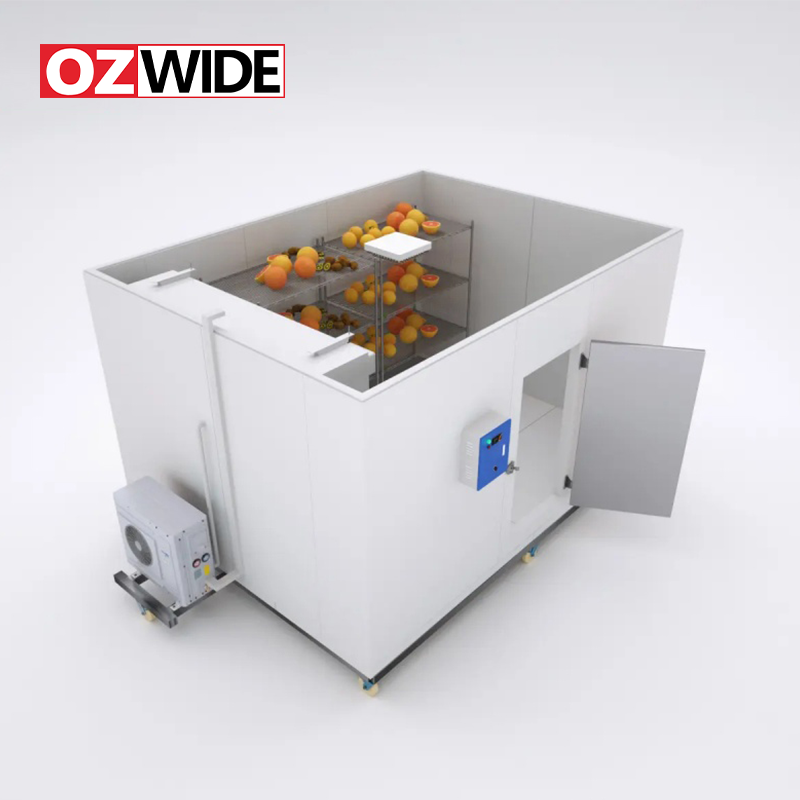
Operations requiring bulk inventory overflow find massive value in standardized reefers. They handle seasonal stock buildups perfectly during agricultural harvest peaks. Food processors use them when sudden inbound shipments exceed internal cooler space. Global intermodal shipping relies exclusively on this format. The standardization ensures you can send a payload across the world without repacking the goods.
Implementing Container Cold Storage acts as a highly scalable alternative to permanent construction. Building a brick-and-mortar refrigerated facility takes months and requires heavy permitting. Dropping two or three reefers into an empty yard expands your holding capacity instantly. You add or subtract units based strictly on current seasonal demand.
Freezer boxes fulfill entirely different strategic criteria. They remain optimal for multi-stop distribution routes in urban centers. Catering businesses use them to transport prepared meals directly to event venues. They excel when spatial constraints prohibit placing a large 20-foot or 40-foot box on the property. Pharmaceutical distributors use them to ensure delicate vaccines remain compliant during the final transit leg.
Misaligning your equipment choice introduces significant risk factors. Over-investing in a reefer for a low-volume operation leads directly to wasted energy. You end up paying to cool empty space. Under-investing by relying on small boxes for large volumes causes severe bottlenecks. Stuffing too many products into a small freezer box compromises essential airflow. Without proper air circulation, products at the center of the box quickly spoil.
Initial acquisition models vary sharply between these asset classes. Sourcing new or used reefers requires a substantial upfront capital expenditure (CAPEX). Leasing offers an alternative, spreading the acquisition burden over monthly terms. Commercial-grade freezer boxes command a much lower initial purchase price. Smaller operations often buy them outright. Evaluating these acquisition paths requires mapping out exactly how long you intend to utilize the equipment.
Operating expenses (OPEX) hinge heavily on energy consumption models and ongoing upkeep.
Energy Consumption: Reefers draw high, continuous amperage to maintain deep freezes across large volumes. Smaller active freezer boxes pull intermittent power only when internal temperatures rise above a set threshold.
Component Complexity: Reefers utilize heavy-duty industrial compressors, evaporator coils, and specialized microprocessors.
Service Requirements: Maintaining a reefer mandates hiring certified HVAC/R technicians. They handle refrigerant top-offs and complex electronic diagnostics.
Simpler Maintenance: Freezer boxes generally present simpler maintenance profiles. Passive boxes require almost zero mechanical upkeep beyond cleaning and inspecting door seals.
Standard amortization timelines differentiate the return on investment. Reefers placed in harsh commercial environments depreciate steadily but maintain strong secondary market resale value. They easily last over a decade with strict preventative maintenance. Commercial freezer boxes amortize faster due to frequent physical handling and lighter construction materials. You extract maximum ROI by aligning the asset's lifespan directly with your expected contract durations.
Regulatory compliance dictates how supply chains manage temperature mapping. The Food Safety Modernization Act (FSMA) and Good Distribution Practice (GDP) enforce strict audit trails. You must prove the cargo never breached safe thresholds. Both equipment types handle these requirements but through very different technological approaches. Establishing proper documentation prevents costly product rejections upon delivery.
Datalogging integration sets modern reefers apart. Manufacturers build sophisticated telematics directly into the refrigeration unit. These systems provide live remote monitoring via cellular or satellite networks. Dispatchers see exact internal temperatures, set points, and alarm states from a centralized dashboard. Basic freezer boxes rarely include this native technology. You must install aftermarket data loggers or Bluetooth sensors inside the box to capture the required thermal history.
Physical security profiles differ based on construction materials. Manufacturers build shipping containers from heavy Corten steel. This steel resists aggressive corrosion in maritime environments. It also provides exceptional inherent theft resistance. Breaking through corrugated steel requires heavy industrial tools. Freezer boxes utilize lighter-weight composites, aluminum, or molded plastics. This keeps them mobile but makes them far more vulnerable to unauthorized physical access.
Choosing between large-scale Container Cold Storage and agile freezer boxes dictates your operational efficiency. Navigating this decision correctly prevents severe logistical delays and protects sensitive inventory. A structured evaluation eliminates the guesswork from your next procurement cycle.
Assess your daily volume requirements to determine if you need bulk capacity or targeted, modular holding.
Audit your available site infrastructure, specifically checking for 3-phase electrical capabilities and level ground space.
Define the asset's primary supply chain role, separating long-term yard holding from dynamic last-mile delivery routes.
Calculate the actual cost-per-pallet for both active energy draw and ongoing maintenance.
Your immediate next step requires practical site verification. Conduct a thorough power audit with a licensed electrician before requesting quotes from leasing or manufacturing partners. This ensures your facility can actually support the heavy electrical demands of your chosen equipment.
A: Yes, many facilities use them for semi-permanent holding. However, you must address local municipal zoning laws first. You also need properly leveled ground to ensure the doors function correctly. Long-term usage requires establishing a strict preventative maintenance schedule for the aging refrigeration components.
A: An insulated container relies entirely on passive cooling. It has thick thermal walls but no mechanical machinery. A reefer features an active, powered refrigeration unit that continuously pumps cold air through the cargo space to maintain precise climates.
A: It depends heavily on local municipality rules. Placing small freezer boxes indoors usually requires no permits. Positioning large outdoor reefers often triggers zoning restrictions, property setback rules, and noise ordinances due to the loud compressor machinery.
A: Daily consumption varies based on ambient weather and cargo requirements. A modern 20ft unit holding frozen goods typically consumes between 15 and 30 kilowatt-hours per day. Extremely hot external climates push this baseline estimate significantly higher.


