close
Choose Your Site
Global
Social Media

Views: 0 Author: Site Editor Publish Time: 2026-06-07 Origin: Site


Specifying compressed air systems carries incredibly high stakes for facility managers. Selecting the wrong technology invariably leads to excess energy consumption. It causes disruptive noise complaints and severe product contamination. You simply cannot afford unexpected production halts. Enter the Scroll Compressor. We define it as a highly specialized, predominantly oil-free solution. Engineers purposefully designed it for stringently regulated or profoundly noise-sensitive environments. Medical labs, dental offices, and cleanrooms heavily rely on them. They supply exceptionally pure air without disruption. This article comprehensively demystifies the exact mechanical operation of these unique machines. We provide a rigorous, evidence-based framework detailing essential performance metrics. You will discover exactly how to evaluate this specific technology. We will help you determine if it represents the correct strategic investment for your unique application requirements.
Mechanism: Scroll compressors utilize two interleaving spiral vanes (one stationary, one orbiting) to compress air continuously, resulting in virtually pulsation-free delivery.
Primary Value: They offer Class 0 oil-free air, whisper-quiet operation, and low maintenance due to having only one moving part.
Best Fit: Ideal for medical, dental, pharmaceutical, and laboratory applications requiring ultra-clean air at low-to-medium flow rates (CFM).
Core Limitation: Not designed for heavy industrial base-load applications exceeding their continuous output capacity; multiplexing is required for scalability.
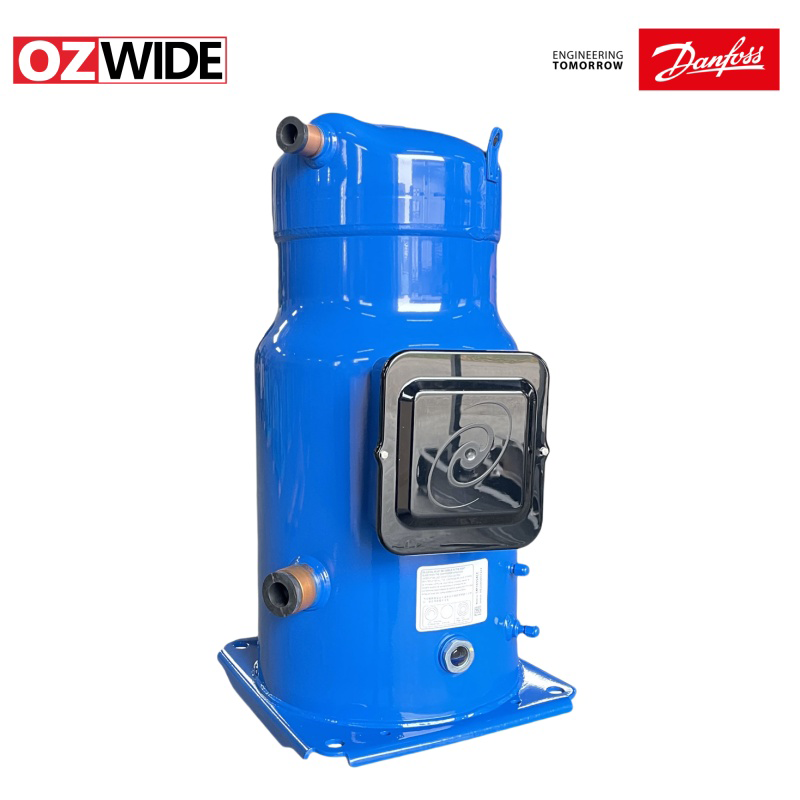
Understanding the internal mechanics helps you appreciate the engineering elegance. The core architecture relies on two interleaving spiral vanes. One scroll remains completely stationary. The other scroll orbits eccentrically within it. They never touch each other. This critical absence of metal-to-metal contact defines the machine. It completely eliminates the need for lubrication inside the compression chamber. The design ensures high purity output.
The system executes a precise sequence. It moves air smoothly from the perimeter to the core. We can map this continuous process.
Intake: Atmospheric air enters the outer edge of the interleaving scrolls. The geometry welcomes maximum volume at this outer boundary.
Compression: The orbiting motion begins. It captures the intake air. It traps this air inside isolated, crescent-shaped pockets. The continued orbiting forces these pockets toward the center. The volume of each pocket systematically reduces. This reduction rapidly increases internal air pressure.
Discharge: The highly pressurized air reaches the exact center of the scrolls. It then exits continuously through a dedicated center port.
This continuous cycle delivers a remarkable engineering outcome. Specific models easily achieve true 100% duty-cycle capabilities. The overlapping compression pockets guarantee virtually pulsation-free delivery. You eliminate the aggressive hammering often found in older systems. The Scroll Compressor inherently produces significantly lower vibration. It heavily outperforms traditional reciprocating models in sheer smoothness. Your sensitive pneumatic equipment receives steady, predictable airflow.
Facility managers prioritize predictable outcomes. Guaranteed air purity solves massive operational headaches. The ISO 8573-1 Class 0 standard certifies absolutely oil-free air. This certification provides immense regulatory value. It eliminates contamination risk entirely. Food processors cannot risk oil vapor touching consumable goods. High-tech manufacturing requires pristine cleanrooms. Medical facilities rely on pure breathing air. In these strict environments, oil-free certification prevents disastrous recalls. It guarantees absolute product integrity.
Acoustic performance represents another major operational driver. These machines operate exceptionally quietly. Typical decibel ratings hover between 50 and 65 dB. This roughly equates to normal conversational volume. You can install them directly on the production floor. You eliminate the need for a dedicated, sound-proofed compressor room. This flexibility vastly reduces installation complexity. Point-of-use deployment saves massive amounts of piping infrastructure. It also minimizes pressure drops across long facility distances.
Maintenance economics favor this simplified mechanical design. They utilize very few moving parts. You do not need to replace intake valves. You avoid changing piston rings. You skip costly piston replacements entirely. The oil-free nature removes another massive burden. You completely eliminate oil-water condensate disposal. Environmental regulations heavily restrict oily condensate dumping. Avoiding this byproduct simplifies facility management significantly. It keeps your daily operations lean and environmentally compliant.
Selecting the right technology demands accurate comparisons. Every facility operates under unique capacity thresholds. We must evaluate solutions logically.
First, consider the battle against reciprocating units. Reciprocating machines generate high noise and severe vibration. They struggle to maintain continuous flow. They require cool-down periods. Conversely, the scroll design wins easily on continuous flow. It runs infinitely smoother. It produces a fraction of the noise. However, reciprocating models often win basic capacity arguments for raw, dirty shop air. They provide aggressive burst power for impact tools. If purity and noise do not matter, reciprocating machines survive harsh conditions easily.
Next, we contrast against rotary screw configurations. Rotary screw machines dominate high-volume requirements. They efficiently deliver massive CFM ratings. They serve continuous industrial base-loads effortlessly. Scroll models top out at lower flow rates. They excel precisely where rotary screws become inefficient. A massive rotary screw wastes energy handling tiny intermittent demands. A dedicated Scroll Compressor handles low-to-medium clean air loads perfectly. You must match the machine perfectly to the airflow demand.
Technology Comparison Chart: Air Compressor Categories | |||
Feature | Scroll | Reciprocating | Rotary Screw |
|---|---|---|---|
Air Purity | Class 0 Oil-Free | Typically Oil-Lubricated | Oil-Flooded or Oil-Free |
Noise Level | Very Low (50-65 dB) | High (75-90 dB) | Moderate to High |
Duty Cycle | 100% Continuous | Intermittent (approx. 60-70%) | 100% Continuous Base-Load |
Optimal Flow Rate | Low to Medium (Under 100 CFM) | Low to Medium | High (100+ CFM) |
This structural comparison clarifies your boundaries. Do not push a machine beyond its intended capacity limits. Understand the strict environmental tolerances. Align your facility expectations precisely with these engineering realities.
Every mechanical system carries inherent operational limitations. Transparency ensures better long-term reliability. The tip seal wear factor demands your attention. The interleaving spirals do not touch. However, they rely on specialized PTFE tip seals. These seals prevent internal air leakage. They maintain compression efficiency. Over time, these seals degrade. Maintenance interventions happen rarely. Still, the actual airend elements eventually require complete rebuilds or replacements. You must anticipate this inevitable mechanical intervention.
Thermal management presents another serious limitation. Compressing air generates massive amounts of heat. Proper ventilation remains strictly non-negotiable. You must evacuate heat from the compressor enclosure continuously. High ambient room temperatures degrade performance quickly. They accelerate tip seal wear exponentially. If you place the unit inside a hot, unventilated closet, it will fail prematurely. You must monitor ambient environment temperatures constantly. Good airflow preserves internal components effectively.
Scalability introduces unique engineering challenges. Facility demands rarely remain static. What happens when your air demand grows? Manufacturers solve this using multiplexing. They install multiple scroll modules inside a single enclosure. The master controller activates modules sequentially. If demand peaks, all modules run. If demand drops, it shuts unneeded modules down. Multiplexing provides excellent redundancy. If one module fails, the others maintain critical facility pressure. You must weigh these redundancy benefits carefully. Sometimes, simply upgrading to a variable-speed rotary screw makes more sense for massive expansions.
You need a decisive method for final selection. Vague estimates guarantee poor performance. Use clear boundaries. Ask your engineering team specific operational questions. Validate every assumption thoroughly.
Review this precise success criteria checklist:
Does the specific application legally or practically mandate absolutely oil-free air?
Is your facility's continuous required flow rate generally under 50-100 CFM?
Are acoustic noise restrictions a critical, non-negotiable facility constraint?
Do you lack a dedicated, sound-dampened mechanical room for heavy equipment?
If you answered yes repeatedly, you have found your match. Now, you must execute immediate next-step actions. Do not guess your airflow requirements. Audit your exact current CFM demand. Measure your necessary system pressure accurately. Document your required ISO air quality standards comprehensively. Gather this technical data before you ever request a quote. Precision eliminates operational risk.
We firmly establish that a scroll compressor remains a high-precision tool. It performs exceptionally well in specific environments. It dominates high-purity, low-noise scenarios perfectly. It guarantees essential regulatory compliance. However, it is never a blanket solution for universal compressed air needs. You cannot force it to perform heavy industrial base-load duties. Applying it incorrectly guarantees premature mechanical failure. You must respect its strict engineering boundaries.
Take proactive control of your infrastructure. Do not rely on outdated assumptions. We strongly recommend contacting a certified systems engineer immediately. Schedule a comprehensive facility air audit. Review your specific sizing requirements directly with a professional. They will help you avoid severely over-specifying or critically under-specifying your new system. Protect your production reliability today.
A: Most industrial models operate between 10,000 and 40,000 hours before requiring an overhaul. This lifespan heavily depends on ambient conditions and application demands. Excellent ventilation extends airend life significantly. You must monitor operating temperatures closely. High heat degrades internal tip seals faster. Replacing the airend is inevitable. Proper preventative maintenance delays this requirement.
A: Yes. Specific designs fully support a 100% duty cycle. They generate virtually zero pulsation. However, intermittent use often maximizes overall mechanical lifespan. Running them continuously near maximum capacity generates substantial heat. You should size the equipment carefully. Allowing periods of rest cools the internal components. This practice preserves the critical tip seals.
A: The vast majority of industrial and medical models are completely oil-free. They guarantee Class 0 air purity. However, oil-lubricated versions frequently exist in refrigeration and HVAC systems. You must specify an air-specific model during procurement. Never assume a generic unit guarantees oil-free operation. Always verify the ISO 8573-1 certification before installation.


