close
Choose Your Site
Global
Social Media

Views: 0 Author: Site Editor Publish Time: 2026-09-02 Origin: Site


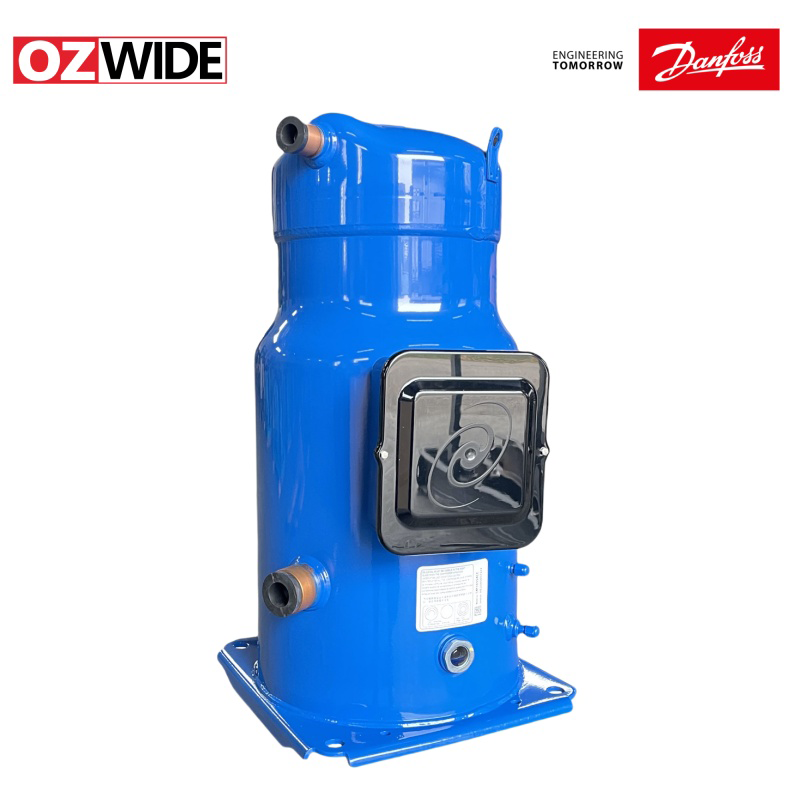
Selecting the right compressor dictates the ultimate success of any HVAC or refrigeration system. While many components matter, the heart of the cooling cycle carries the heaviest burden for system efficiency and long-term reliability. A hermetic Scroll Compressor integrates the motor and compression mechanisms inside a fully sealed welded steel casing. This specific design practically eliminates refrigerant leaks but requires strategic lifecycle planning since internal field repairs remain impossible.
We will move beyond theoretical basics in this guide. You will get a concrete framework for evaluating, comparing, and specifying these compressors for commercial applications. By understanding their unique mechanical behaviors and operational limits, you can make smarter procurement decisions. We will explore core mechanics, objective comparisons against reciprocating units, and strict implementation realities. This knowledge empowers you to optimize cooling performance while avoiding catastrophic system failures.
Mechanical Simplicity: Scroll compressors operate with only two main scroll members (one fixed, one orbiting), eliminating complex valve designs and reducing mechanical failure points.
Superior Volumetric Efficiency: Continuous compression cycles result in higher efficiency and smoother operation compared to traditional piston-driven alternatives.
Strict Implementation Constraints: Because hermetic units are entirely sealed, internal field repairs are impossible; robust system protection (phase monitoring, liquid slugging prevention) is mandatory.
Clear Procurement Logic: The choice between scroll and reciprocating technologies hinges on capacity requirements, operational noise limits, and long-term energy compliance targets.
The internal geometry of these devices reveals their mechanical brilliance. They rely on an elegant, continuous process rather than erratic piston strokes. Understanding this internal behavior clarifies why the technology dominates modern commercial cooling applications.
Inside the casing, two Archimedean spirals interact to move refrigerant gas. One scroll remains completely stationary. The other scroll orbits around it. They do not rotate on a center axis; instead, the orbiting scroll shifts in a circular path. This movement creates crescent-shaped gas pockets at the outer edges. As the orbit continues, these pockets seal and travel toward the center. The pocket volume decreases continuously. This volume reduction increases the gas pressure. Finally, the highly pressurized gas exits through a central discharge port. This continuous intake, compression, and discharge happens simultaneously, eliminating pulsation.
Traditional compressors require suction and discharge valves to manage gas flow. These valves open and close rapidly under immense stress. Valve plates flutter, fatigue, and frequently fail. Furthermore, valves create clearance volume—a small space where pressurized gas remains and re-expands, wasting energy. A hermetic Scroll Compressor uses no internal valves. The mating scrolls dictate the flow direction organically. This valve-free design eliminates major mechanical failure points. It also pushes volumetric efficiency close to 100 percent because no pressurized gas gets trapped in the compression chamber.
Engineers designed these units to tolerate imperfect real-world conditions through a feature called compliance. Radial compliance allows the scroll members to separate slightly from side to side. Axial compliance allows them to separate vertically.
Liquid Handling: If liquid refrigerant or minor system debris enters the chamber, the scrolls part momentarily. They sweep the hazard through the system without suffering catastrophic damage.
Wear Reduction: Compliance keeps the scroll flanks in optimal contact during normal operation, allowing them to "wear in" rather than "wear out" over time.
However, operators must respect realistic durability thresholds. While compliance forgives occasional minor liquid return, severe liquid slugging will still destroy the internal mechanisms. Proper superheat control remains essential.
Specifying engineers frequently weigh scroll technology against semi-hermetic or hermetic reciprocating (piston) alternatives. Both technologies serve specific purposes, but their performance profiles diverge significantly under load.
Table 1: Scroll vs. Reciprocating Compressor Performance Metrics
Performance Metric | Hermetic Scroll Compressor | Reciprocating Compressor |
|---|---|---|
Isentropic Efficiency | Highest at mid-to-high loads; no valve losses. | Steep drop-off at partial loads due to clearance volume. |
Vibration Output | Low (continuous orbital motion). | High (reciprocating piston mass). |
Liquid Tolerance | High (radial/axial compliance allows separation). | Very Low (liquid locks pistons, bending rods). |
Part Count | Minimal (two main moving parts). | Complex (pistons, rods, valves, crankshafts). |
Isentropic efficiency measures how perfectly a compressor converts electrical input into gas pressure. Across diverse load profiles, scroll units typically outperform reciprocating units. Reciprocating designs suffer from re-expansion losses at the top of every piston stroke. The Scroll Compressor avoids this entirely. At medium and high pressure ratios, the orbital design maintains a flat, highly efficient performance curve. Reciprocating units hold their ground in highly specialized, ultra-deep freezing applications where multi-stage compression mitigates their inherent clearance losses.
Acoustic output strongly influences commercial specifications, especially for rooftop units near occupied spaces. Continuous compression inherently reduces gas pulsation. The orbital motion avoids the violent directional changes found in reciprocating crankshafts. Consequently, vibration transmission into the piping network drops drastically. This lower vibration reduces the likelihood of copper pipe fractures over the system lifecycle. You save on noise attenuation blankets and vibration isolators.
Liquid refrigerant entering a compressor chamber usually spells disaster. Liquids do not compress. In a reciprocating unit, liquid intake causes hydrostatic lock. The piston slams into the incompressible fluid, shattering valves or bending connecting rods instantly. Scroll units evaluate differently here. Their radial and axial compliance allows them to "burp" minor liquid slugs safely. You must acknowledge the limits of this liquid tolerance, though. Exaggerated claims of indestructibility lead to sloppy system design. Continuous flood-back will wash oil from the scroll bearings, causing severe scoring and eventual seizure.
Selecting the right unit requires matching hardware capabilities to environmental demands. Follow these specific criteria to ensure optimal system alignment.
Matching Capacity to Load: You must decide between single-speed and variable-speed models. Single-speed units cycle on and off to meet demand, suiting steady-load applications and strict capital budgets. Variable-speed (inverter-driven) units modulate their speed dynamically. They match the cooling load precisely, eliminating temperature swings and dramatically reducing starting current surges.
Refrigerant Compatibility and Compliance: Environmental regulations force a rapid shift toward low-GWP (Global Warming Potential) transition refrigerants. Mildly flammable A2L refrigerants like R-32 and R-454B operate at different pressures and discharge temperatures than older HFCs. You must verify the specific compressor model carries explicit approvals for your chosen refrigerant.
Operating Envelopes: Manufacturers publish strict operating envelopes defining allowed evaporating and condensing temperature ranges. Operating outside these boundaries degrades the oil and overheats the motor. Assess your extreme climate constraints. Desert installations demand high condensing temperature ratings. Deep-cooling applications might require vapor injection technology to keep discharge temperatures within safe limits.
Footprint and Modularity: Facility managers often need scalable capacity without the massive footprint of heavy industrial equipment. You can utilize tandem (two) or trio (three) scroll configurations. Manifolding multiple units together provides excellent part-load staging. If the system needs 25% capacity, only one compressor runs. This modularity offers redundancy and efficiency in a compact spatial footprint.
Even the most robust mechanical designs fail under poor operational conditions. Understanding the vulnerabilities of hermetic systems helps prevent premature replacements.
The term "hermetic" means completely airtight. Manufacturers weld the heavy steel casing shut at the factory. Transparently stated, internal mechanical failure requires full unit replacement. You cannot open the shell to replace a worn bearing or a damaged scroll flank in the field. Frame this strict limitation as a primary reason for rigorous preventative maintenance. You must keep the broader system clean, dry, and properly charged. A contaminated system causes a compressor burnout, forcing you to replace the entire sealed unit.
Most commercial units utilize three-phase electrical power. If an electrician wires the phase sequence incorrectly, the internal motor spins backward. Reverse rotation presents an immediate, critical risk. The scrolls will not pump any refrigerant gas. The unit will emit a loud, abnormal rattling noise. Without suction gas flowing across the motor, the internal components overheat rapidly. The scroll tips grind against each other without lubrication. You must mandate the inclusion of phase monitors in the main control panel. These relays detect incorrect phasing and prevent the contactor from energizing the unit.
Hermetic motors rely on cool returning suction gas to prevent overheating. During low-charge scenarios or sudden system blockages, mass flow drops. The motor loses its primary cooling source. You must outline the necessity of internal motor protection. Thermal overloads embedded in the motor windings break the control circuit if temperatures spike. Additionally, installing discharge line thermostats offers critical secondary protection. These sensors monitor the exiting gas temperature, shutting down the equipment before extreme heat carbonizes the lubricating oil.
Every technology has distinct operational boundaries. Knowing when to apply orbital compression guarantees better project outcomes.
These units dominate light-to-medium commercial applications. They represent the gold standard for commercial air conditioning, air-source heat pumps, and standard rooftop units (RTUs). They also excel in supermarket refrigeration racks, where modular staging matches the fluctuating demands of display cases precisely. Their compact size and quiet operation make them perfect for installations near office windows or residential boundaries.
You should avoid specifying this technology for ultra-high capacity industrial cooling. Facilities requiring hundreds of tons of continuous cooling benefit more from heavy-duty screw or centrifugal compressors. Similarly, highly specialized variable high-pressure testing applications might push a hermetic shell beyond its limits. In environments where aggressive custom gases degrade internal components rapidly, semi-hermetic reciprocating units offer distinct repairability advantages. You can unbolt a semi-hermetic head to rebuild it, whereas a welded shell goes straight to the recycling bin.
When comparing manufacturers, evaluate their support ecosystem just as heavily as their hardware specifications.
Lead Times: Verify the availability of emergency replacement stock. Lengthy shipping delays cripple commercial operations.
Exact Footprint Replacements: Ensure the vendor offers models that align with legacy piping configurations to minimize retrofitting labor.
Warranty Structures: Examine the warranty language carefully, noting exclusions related to power anomalies or improper refrigerant charging.
Technical Support Documentation: Choose vendors providing accessible performance software, comprehensive piping guidelines, and detailed operating envelope charts.
Hermetic scroll compressors offer an unmatched balance of high efficiency, low vibration, and mechanical reliability for standard commercial applications. By eliminating delicate valves and utilizing continuous orbital motion, they provide superior volumetric efficiency. However, their fully welded construction demands uncompromising system cleanliness and strict electrical protection. You cannot repair them internally; you must protect them externally.
Your immediate next step involves consulting with a qualified application engineer. Request a detailed performance analysis matching your specific load profiles and regional climate demands against initial capital expenditure. By evaluating the precise operating envelopes and modular staging options, you ensure your specified equipment delivers optimal cooling resilience for years to come.
A: These units generally last 10 to 15 years under typical commercial conditions. However, this lifespan relies heavily on exceptional installation quality, rigorous preventative maintenance, and stable operating conditions. Systems plagued by chronic low refrigerant charge, poor oil return, or frequent electrical anomalies often fail much earlier.
A: No, internal mechanical repairs are impossible due to the welded steel shell. While you can swap external electrical components like contactors, capacitors, or external overload sensors, any internal mechanical or motor winding failure requires replacing the entire compressor unit.
A: A three-phase unit runs backward if the incoming electrical phase sequence is reversed. This is extremely dangerous. It prevents gas pumping, halts motor cooling, and causes severe mechanical grinding. You must shut the system down immediately and install a phase monitor to correct and protect the wiring.
A: Yes, major manufacturers have proactively optimized modern scroll designs specifically for low-GWP transition refrigerants. They engineer internal geometries and lubrication management systems to handle the higher pressures and elevated discharge temperatures associated with modern, mildly flammable A2L refrigerants.


